Waste Water Treatment Seals for Corrosive Tanks
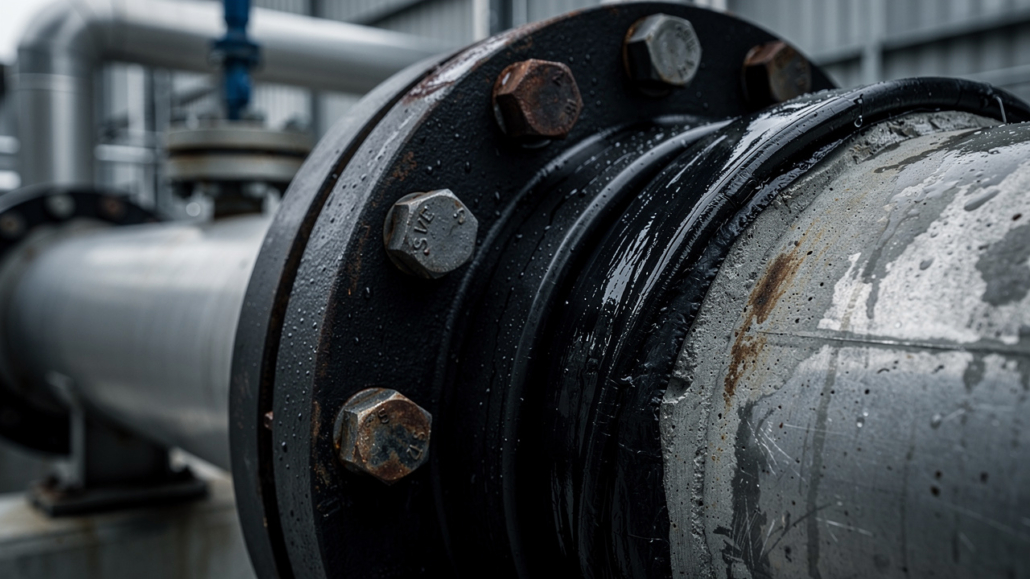
A tiny drip under a corrosive tank can look harmless at first. In wastewater plants, that drip often means the waste water treatment seals hiding inside have started to give up. By the time the leak reaches the floor, pumps, motors, tank walls, and even nearby soil or waterways may already be at risk.
We see this often in treatment facilities that handle strong chemicals, sand and grit, and heavy biological loads. The environment around those seals is harsh every single day. Caustic soda, sodium hypochlorite, coagulants, sediment, and microbes all attack the weakest point in the system. Add tank settlement, thermal movement, and vibration from pumps, and even a well-designed plant in the Philippines can struggle to keep everything tight.
When seals fail, the effects spread fast. Progress on Wastewater Treatment globally shows that infrastructure reliability depends heavily on proper sealing and maintenance practices. Motors burn out on submersible pumps. Corrosive water eats into steel tank walls. Operators face spills, odor complaints, and possible fines for non-compliance. Emergency shutdowns and rush repairs then drive up costs far beyond the price of a set of quality waste water treatment seals.
This is why more facilities are moving from rigid metal parts to rubber-based sealing products. Properly engineered rubber seals, water stoppers, and linings give better chemical resistance, absorb movement, and protect tanks from the inside out. At RK Rubber Enterprise Co., we focus on the engineering behind those parts, not just on the material itself.
In this article, we share how waste water treatment seals work, what really destroys them in corrosive tanks, and how specialized rubber compounds handle those threats better than traditional options. We also explain how our Philippine-based team supports projects from selection to installation, so readers finish with a clear plan to improve reliability and control long-term costs.
“If you can see the leak, you are already late,” is a common reminder among experienced maintenance crews in wastewater plants.
Key Takeaways
A short summary helps put the role of waste water treatment seals into focus before going into details.
- Waste water treatment seals face constant attack from chemicals, abrasion, and biological activity. Good design and the right rubber compound prevent leaks and protect pumps, tanks, and concrete. This protection supports safe, reliable plant operation over many years.
- Material choice decides how long a seal will last in a corrosive tank. The same design in the wrong compound can fail in months, while a better match can last many years. Looking closely at pH, chemicals, and temperature makes that match possible.
- Modern rubber compounds usually perform better than metal parts in wastewater tanks. Rubber does not rust, it flexes with movement, and it handles repeated loading without cracking. This combination gives fewer failures and more stable maintenance planning.
- Investing in higher-grade seals and linings lowers total cost across the plant. There are fewer unplanned shutdowns, less emergency repair work, and longer intervals between replacements. Working with a partner that understands sealing in Philippine conditions helps turn these gains into real savings.
What Are Waste Water Treatment Seals And Why Do They Matter?
When we talk about waste water treatment seals, we mean every rubber or elastomer component that keeps liquid where it belongs inside a plant. These parts sit in pumps, tanks, and pipe joints, and they stop wastewater from leaking along shafts, through wall penetrations, and across construction joints. In corrosive tanks, they also protect steel and concrete from direct contact with aggressive liquid.
At pump level, waste water treatment seals include mechanical seal elements that sit around the rotating shaft. In submersible, dry-pit, and self-priming pumps, these components create a barrier between the process fluid and sensitive parts like bearings and motors. If this barrier opens even slightly, liquid follows the shaft, reaches the motor, and can cause fast and expensive damage.
In concrete tanks, we see another group of waste water treatment seals:
- Rubber water stoppers are cast into joints and expansion gaps to hold back liquids even when concrete sections move.
- Rubber linings form a continuous inner skin that protects the tank shell.
- For special industrial connections, W-Type rubber seals compress into grooves and flanges to stop both liquid and gas leaks.
When these seals fail, the impact is rarely limited to a small drip. Motors in submersible pumps may short out. Corrosive wastewater can attack reinforcement steel in tanks and slabs. Staff face slip risks, exposure to chemicals, and difficult clean-up work. In the Philippines, where high humidity, changing wastewater chemistry, and import lead times make equipment replacement costly, keeping waste water treatment seals in good condition is a key part of plant reliability planning.
Key Challenges Of Corrosive Wastewater Environments
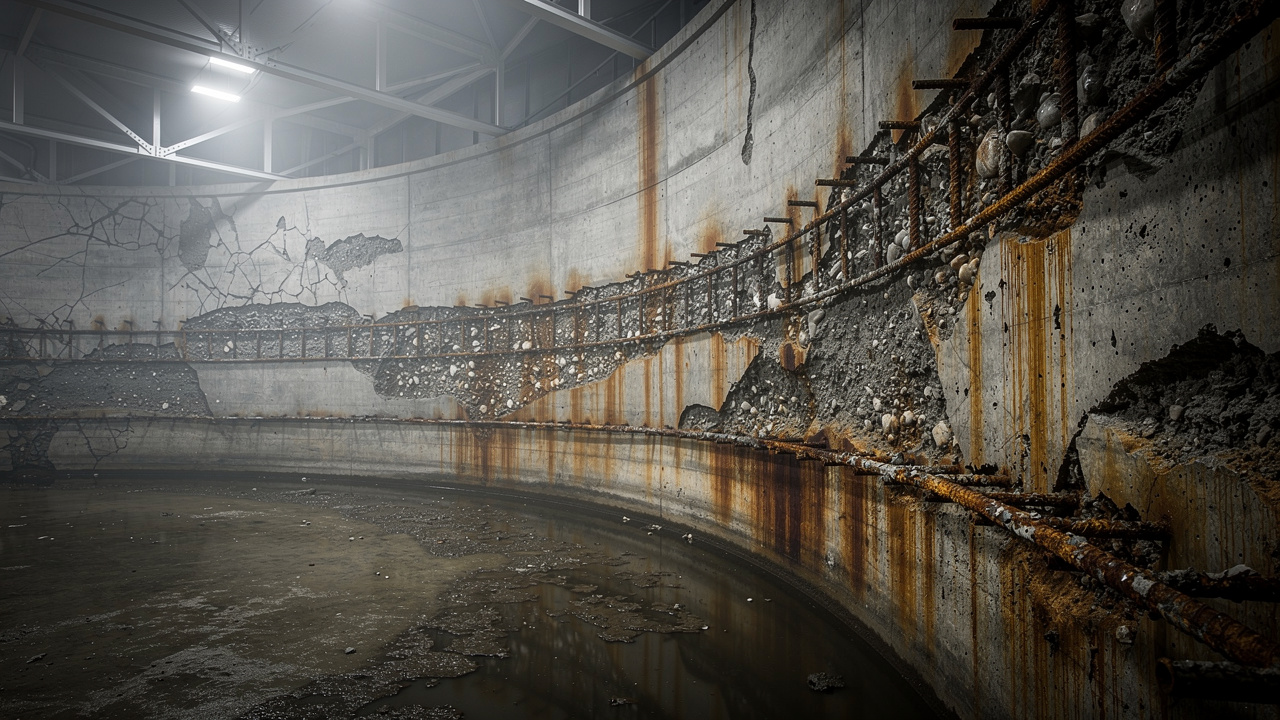
Wastewater treatment is one of the toughest settings for any sealing product. Every waste water treatment seal must deal with chemical attack, physical wear, microbial activity, and movement in the structure around it. Ignoring any of these factors often leads to leaks far sooner than expected.
The main stresses on seals in corrosive tanks include:
- Chemical Corrosion
Typical treatment chemicals such as caustic soda, sodium hypochlorite, poly aluminum chloride, and aluminum sulfate all react with certain rubbers and metals. Some elastomers swell and turn soft, others harden and crack, and metal parts can pit or rust. Because pH can swing from acidic to highly alkaline at different stages of the process, a seal may face several harsh conditions in one duty cycle. Research on the Influence of wastewater treatment processes on seal performance confirms that chemical variability is one of the primary causes of premature seal failure. - Abrasive Solids
Sand, grit, and fine mineral particles are common in Philippine wastewater streams, especially where stormwater and household discharges mix. As these solids pass the seal faces in pumps or move along linings, they act like grinding paste. Over time they cut grooves into sealing surfaces and create tiny paths for liquid to escape. - Fibrous Material And Ragging
Items such as so-called flushable wipes, rags, and hair tangle around pump shafts near the seal area. This build-up, often called ragging, can pull at flexible seal parts, open up seal faces, and interfere with the cooling and lubrication film between them. Once that film breaks, friction and heat rise quickly and the waste water treatment seal can fail without much warning. - Biological Degradation
Modern plants use active microbes to break down organic matter. Some rubber compounds and bonding agents are sensitive to attack from these organisms. Over time they can lose strength, become brittle, or show surface cracking, especially in warm tanks common in tropical climates. - Structural Movement
Dynamic conditions in the structure also put stress on static seals. Tanks settle on their foundations. Concrete expands in the afternoon heat and contracts at night. In a seismic country, small ground movements are also part of the picture. Seals at joints and penetrations must flex with this movement while still pressing firmly against concrete or steel. Without that flexibility, even a tiny shift can open a leak path along a wall or base joint.
As one senior plant engineer puts it, “We can design for chemistry, but if we ignore movement and abrasion, seals will still fail faster than the budget can cope.”
How We Address These Challenges: RK Rubber’s Specialized Sealing Products
When we design and manufacture products for corrosive tanks, we start from the real conditions our clients face, not from a generic catalog. We look at chemical lists, pH ranges, solid loads, and movement in the structure, then match each need with the right waste water treatment seals and compounds. Our goal is simple: keep the plant tight while cutting unplanned downtime.
W-Type Rubber Seals
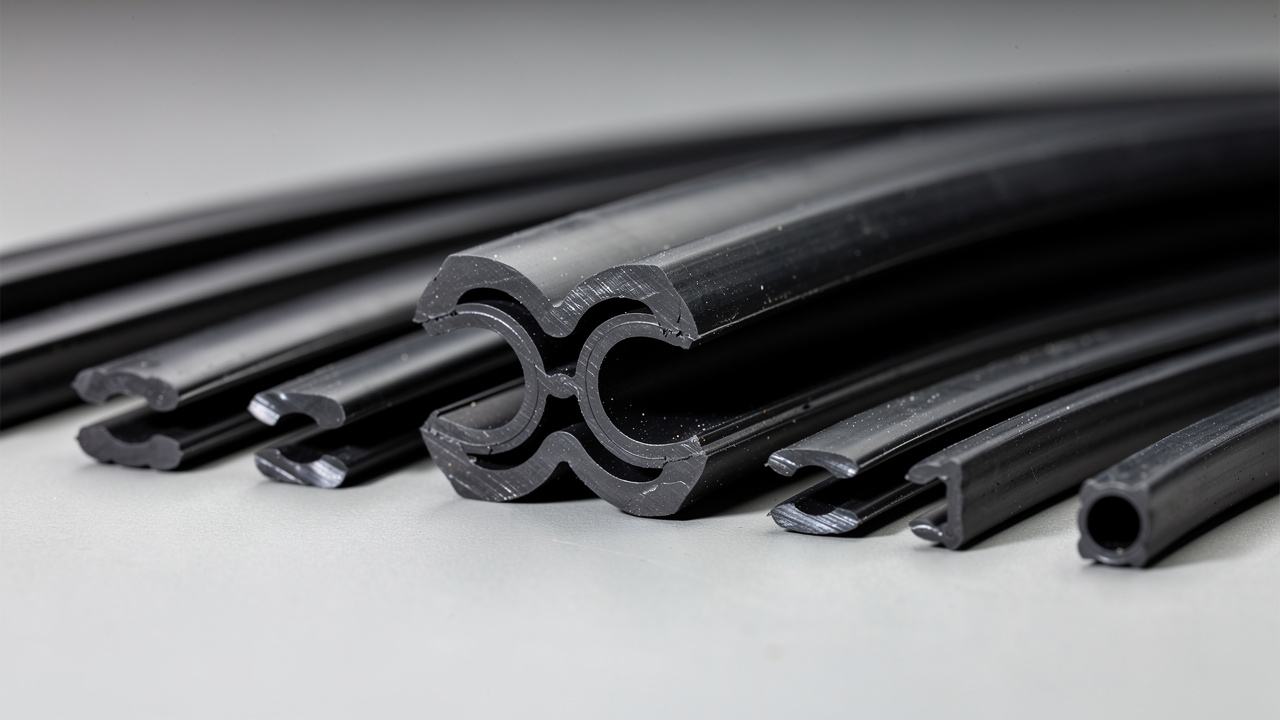
Our W-Type rubber seals use a shaped cross-section that compresses evenly and holds contact pressure over long periods. This form gives several sealing lips within a single part, which helps keep both liquid and gas from passing through critical joints. We use these in industrial wastewater lines, manholes, and special connections where plant operators need high leak resistance under chemical exposure and moderate movement.
Rubber Water Stoppers
For concrete tanks and channels, we produce rubber water stoppers that sit directly inside construction and expansion joints. Unlike rigid metal strips, these flexible parts move with the concrete while still pressing against it. We commonly use EPDM or neoprene for these devices because they resist corrosion and stay flexible in wet conditions. In practice, this reduces joint cracking and minimizes leaks at wall-base and wall-wall interfaces.
Rubber Linings For Corrosive Tank Protection
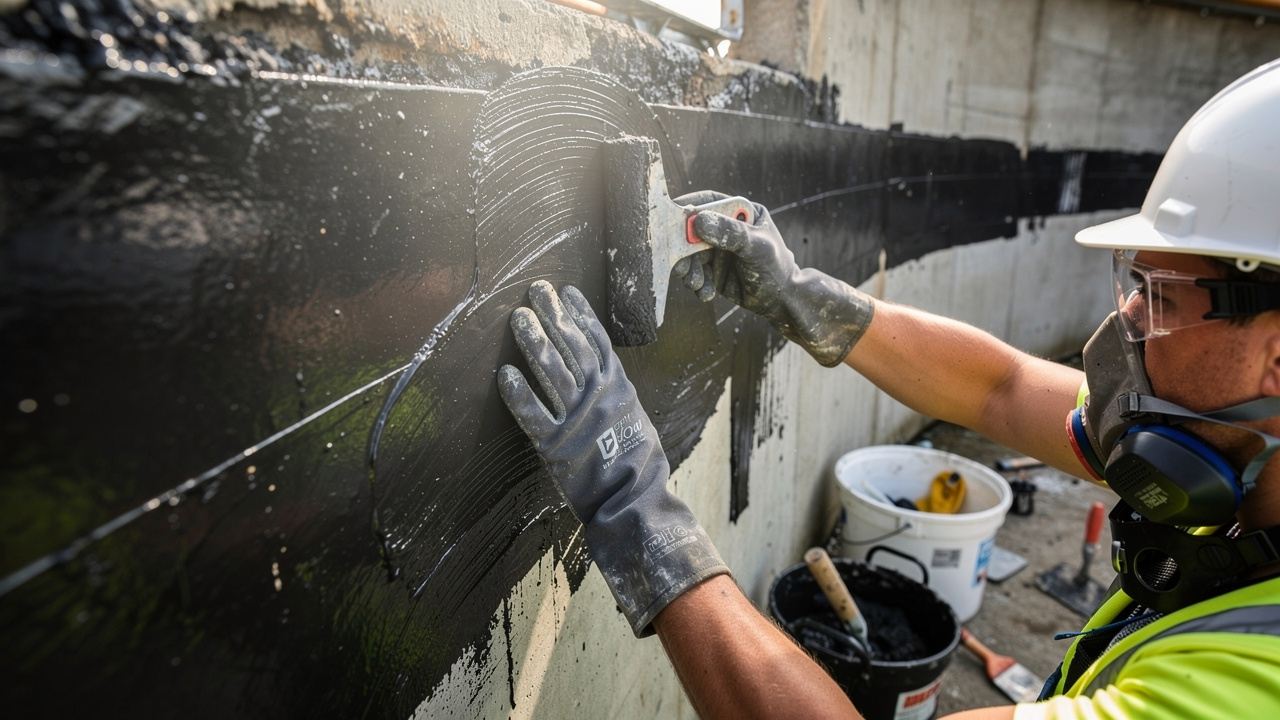
Inside corrosive tanks, rubber linings act as a strong inner skin. Our EPDM linings work well where ozone, sunlight, and caustic chemicals such as sodium hydroxide are present, making them suitable for outdoor caustic tanks. Nitrile linings handle high solid loads and many oils, so they fit well in sludge handling areas and industrial waste tanks. Neoprene linings give a balanced response to heat, oil, and many common chemicals, which suits mixed-duty tanks that see changing contents. By shielding steel or concrete from direct contact, these linings slow down corrosion and extend tank service life.
Customized Rubber Products
Every plant is a bit different, so we often design custom waste water treatment seals for special flanges, manways, or equipment brands. We adjust size, shape, and compound so the part fits properly and carries the right compression when installed. Our engineering team reviews drawings and operating data, then proposes designs that match the real stresses in the field.
Advanced Rubber Compounds
Behind all these items is our material expertise. We work with EPDM for chemical and UV resistance, nitrile for abrasion and many hydrocarbons, silicone for very high or low temperatures, neoprene for balanced performance, and FKM for extreme heat and aggressive chemicals. By matching compounds to each tank’s actual chemical mix and temperature profile, we produce waste water treatment seals that stay stable longer and give plant managers more predictable maintenance windows.
To make selection easier, the table below summarizes where each compound commonly fits in wastewater plants:
| Rubber Compound | Best For | Typical Uses In Wastewater Plants |
|---|---|---|
| EPDM | Strong alkalis, ozone, weathering, hot water | Caustic tanks, aeration tanks, outdoor channels, water stoppers |
| Nitrile | Oils, fuels, greases, abrasion | Sludge lines, industrial wastewater, oily sumps |
| Neoprene | Moderate oils, weathering, general-purpose sealing | Mixed chemical tanks, pipe gaskets, manhole seals |
| Silicone | Very high or low temperatures, thermal cycling | Hot condensate lines, special process areas |
| FKM | Aggressive chemicals, solvents, high temperature | Chemical dosing lines, high-temperature industrial waste |
Choosing the right compound for each duty point is one of the fastest ways to improve seal life without changing the rest of the equipment.
The RK Rubber Advantage: Why Partner With Us
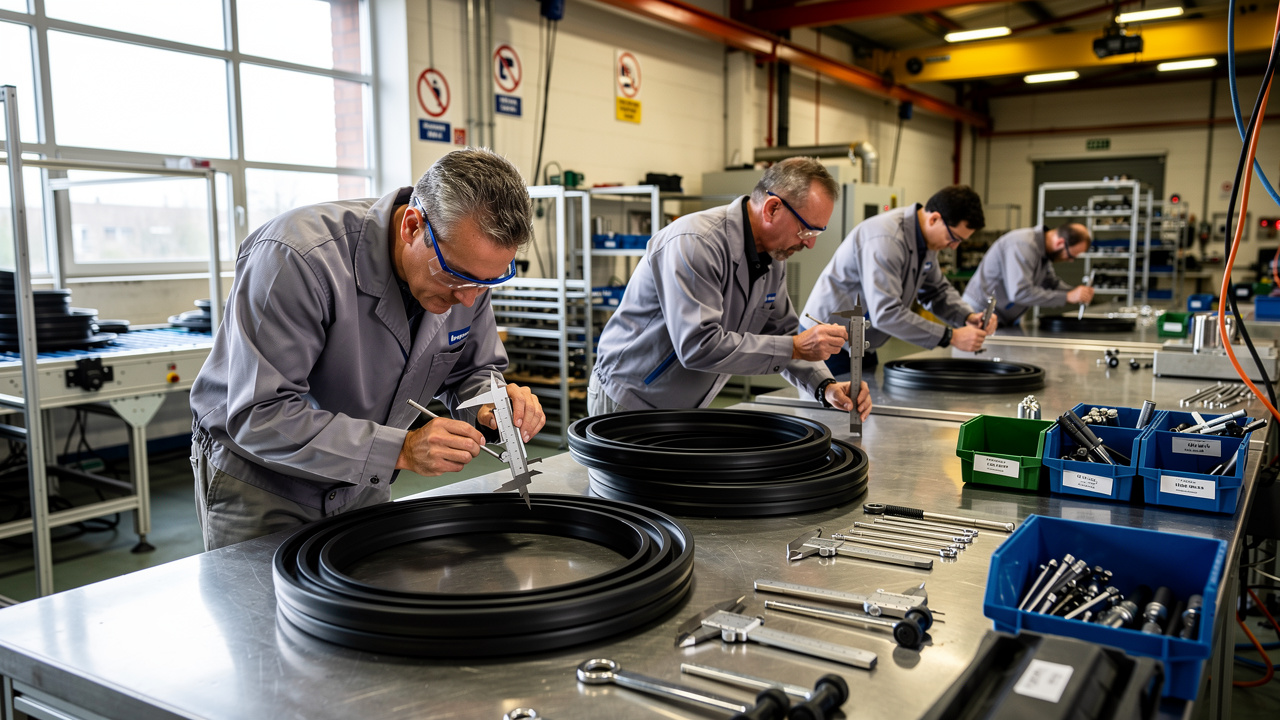
When we work with plant managers, engineers, and contractors, we do not just supply rubber parts. We treat every project as a technical task where the right waste water treatment seals can protect both assets and budgets. That approach sets us apart from basic trading houses that only resell standard items.
We start with the specific conditions at each site, understanding Why Mechanical Seals Are vital for reliable pump operation in water and wastewater applications. Our team studies the wastewater chemistry, operating temperatures, solids content, and expected movement in tanks or structures. Then we recommend seal designs and compounds that match those conditions, instead of forcing a one-size-fits-all product into place. This focus on application details pays off in longer service life and fewer surprises.
Our background in rubber compounding gives us a strong base for those choices. We understand how EPDM, nitrile, silicone, neoprene, and FKM behave under caustic, acidic, or oily conditions, as well as under tropical heat and UV exposure in the Philippines. That knowledge helps us choose materials that hold their properties over time instead of breaking down early.
Because our products are flexible, corrosion-resistant, and able to follow structural movement, they reduce the stress on joints, penetrations, and tank walls. Many clients see lower maintenance hours, fewer emergency shutdowns, and reduced replacement orders once they switch to well-matched waste water treatment seals and linings from us.
“Seals are a small share of our capex, but they cause a big share of our downtime when they fail,” notes one operations manager from a Philippine industrial plant. “Switching to the right rubber parts turned sealing from a constant problem into something we rarely think about.”
We also support projects across their full life cycle. That means helping with material selection, advising on installation practices, and sharing maintenance tips based on field experience. Our manufacturing follows ISO 9001 quality management, and we use tested raw materials from trusted suppliers. As a Philippine-based producer, we can react quickly to design changes, urgent needs, and on-site findings without long international lead times.
Conclusion
Sealing may look like a small part of a wastewater plant, but it carries heavy responsibility. Inside corrosive tanks and pump rooms, waste water treatment seals sit between aggressive liquids and the equipment, structures, and people that must stay safe. Cutting corners at this point often leads to leaks, damaged assets, and long nights dealing with unplanned shutdowns.
Spending more attention and budget on high-grade rubber seals, water stoppers, and linings is a smart long-term choice. Flexible, chemically resistant parts handle movement, abrasion, and chemical swings far better than rigid, corrosion-prone metal items. Over time, that means fewer failures, less emergency work, and more predictable operating costs.
At RK Rubber Enterprise Co., we bring together W-Type rubber seals, engineered water stoppers, specialized linings, and custom-made products to handle the specific stresses of corrosive wastewater tanks. We combine local manufacturing in the Philippines with technical support, so our clients get parts that fit their equipment and their conditions.
If leaks, frequent seal changes, or early tank corrosion are starting to show up in your plant, this is a good time to review your sealing setup. We invite you to reach out to our team to discuss your current waste water treatment seals, share your operating data, and explore better options for long-term reliability and cost control.
FAQs
Question 1: What Makes Rubber Seals Better Than Metal Alternatives For Wastewater Tanks?
Rubber seals handle movement much better than metal parts, because they compress and flex without cracking. They also resist rust, so they do not suffer the oxidation that often shortens metal seal life. Installation is usually simpler, with fewer special tools and less surface preparation. In corrosive wastewater, a well-chosen rubber compound keeps its sealing force longer, which cuts maintenance needs and replacement frequency.
Question 2: How Do I Know Which Rubber Compound Is Right For My Specific Wastewater Application?
Choosing the right compound starts with understanding the liquid inside your tank or line. We look at pH ranges, the exact chemicals used in dosing, and the typical operating temperature, as well as UV and ozone exposure for outdoor tanks. We also consider oils, solvents, abrasion levels, and expected structural movement. At RK Rubber Enterprise Co., our technical team reviews this data and then recommends the most suitable compound, such as EPDM, nitrile, neoprene, silicone, or FKM. We are happy to provide a consultation to walk through this selection with you.
Question 3: What Is The Typical Lifespan Of Rubber Seals In Corrosive Wastewater Environments?
Service life varies with chemistry, temperature, solids content, and how the seal was installed and maintained. With a well-matched compound and good installation practice, many waste water treatment seals can run five to ten years or more. When materials are poorly matched to the chemicals, they may fail within a year or even a few months. Our engineered compounds and custom designs are intended to extend life well beyond what generic parts usually deliver.
Question 4: Can Existing Metal Seals And Joints Be Retrofitted With Rubber Products?
In many cases, yes, existing metal seals and rigid joints can be upgraded using rubber-based products. We frequently design custom rubber seals, water stoppers, and linings that fit into current flanges, joints, or tank shells without full replacement. Typical retrofit work includes sealing leaking construction joints, upgrading old metal expansion joints, and lining corroded tanks from the inside. Our engineering group can study your drawings or site conditions and advise on what kind of retrofit is practical.
Question 5: How Does RK Rubber Enterprise Co. Ensure Quality And Consistency In Your Sealing Products?
We operate under ISO 9001 quality management, which guides our processes from raw material checks to final inspection. Every batch of compound and every finished product goes through tests for chemical resistance, tensile strength, hardness, and flexibility. We work only with trusted suppliers of rubber ingredients and reinforcing materials. Field feedback from industrial clients also feeds into our design and process updates, and we stand behind our products with technical support throughout their service life.