
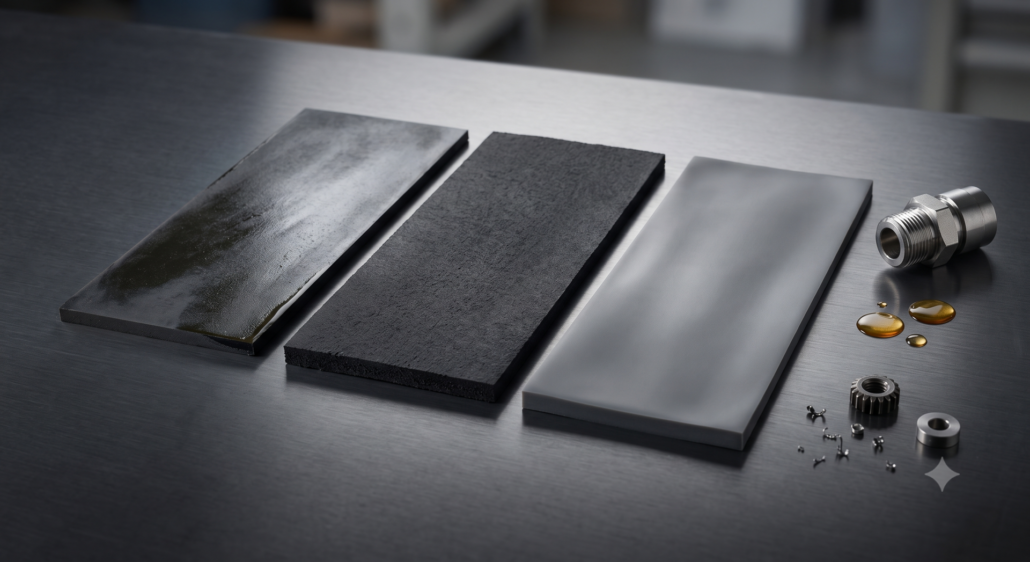
NBR vs EPDM vs Silicone | Oil-Resistant Rubber Comparison
NBR is usually the best choice for oil, fuel, hydraulic fluid, and lubricant exposure. It resists swelling and keeps sealing performance in engine seals, O-rings, and oil seals. EPDM is better for weather, steam, and outdoor use, but it fails in petroleum oils. Silicone handles heat and weather well, yet it offers only moderate oil resistance. For harsher chemicals and higher heat, Viton is often the stronger option. More details follow below.
Key Takeaways
- NBR is usually the best choice for oil, fuel, hydraulic fluid, and lubricant seals.
- EPDM resists weather, steam, and water, but petroleum oils and fuels cause swelling and failure.
- Silicone handles extreme temperatures and weather well, but its oil resistance is only moderate.
- For harsh chemicals and higher heat, Viton outperforms NBR, EPDM, and silicone, though it costs more.
- Choose the rubber by matching fluid exposure, temperature, and whether contact is intermittent or continuous.
Which Rubber Is Best for Oil Resistance?
For oil resistance, nitrile rubber (NBR) is the usual first choice because it resists petroleum-based oils, fuels, hydraulic fluids, and lubricants well, making it common in engine seals, O-rings, and fuel-system parts. In oil compatibility, NBR sets the baseline for seal selection. When service is harsher, Viton fluoroelastomer can handle stronger chemicals and higher temperatures, but at a much higher cost. Silicone offers heat stability and flexibility, yet it is only moderately resistant to oil and is not suited to continuous petroleum exposure. EPDM should be ruled out for oil contact; it swells, softens, and loses sealing force. The right choice comes from matching compound, temperature, and duty cycle to the application.
NBR Rubber for Oils and Fuels
NBR (nitrile butadiene rubber) is a standard choice for parts exposed to petroleum-based oils, greases, and fuels because it resists swelling and preserves sealing performance.
For teams that need dependable service, it stays in the range most oil systems demand.
- Works well in O-rings and oil seals
- Handles hydraulic seals and fuel components
- Retains flexibility from about -40°C to +100°C
- Outperforms EPDM and silicone in mineral oils
- Needs permeation testing and careful compound formulation
It fits moderate-duty engine and hydraulic use where continuous contact with oil is expected. For harsher fluids or higher heat, fluoroelastomers may be selected instead. NBR remains the cost-effective standard when the job is oil resistance, not outdoor durability.
EPDM Rubber for Weather and Heat
EPDM is the standard choice where weather exposure is the main concern, not oil resistance. It resists UV, ozone, rain, and steam, so it is often used in weatherproof gaskets for doors, trunks, sunroofs, roofs, and windows. Its closed-cell, water-repellent structure helps it hold shape and resilience after long periods in humidity and wet service. EPDM also keeps flexibility and low compression set through continuous heat and thermal cycling, limiting thermal aging in outdoor use. For teams that need long service life and fewer replacements, it is usually more cost-effective than oil-resistant elastomers in exterior trim and seals. The limit is clear: petroleum oils and fuels cause swelling, softening, and degradation, so EPDM belongs where weather, not hydrocarbons, defines the duty.
Silicone Rubber for Heat and Chemicals
When the requirement shifts from outdoor weathering to wide temperature tolerance and chemical stability, silicone rubber becomes a strong candidate. Its role is clear in teams that need dependable seals across heat and cold, with a range near -60°C to +200°C.
- Stable flexibility under thermal cycling
- Strong resistance to UV, ozone, and weathering
- Useful in medical and food-grade service for high temperature biocompatibility
- Acceptable resistance to water and many chemicals
- Moderate tear strength, so wear should be managed
Silicone also slows thermal aging mechanisms better than many elastomers in outdoor service. Its oil resistance is only moderate, so continuous petroleum contact is not its best fit. For groups balancing cleanliness, heat, and chemical stability, silicone offers a steady, familiar option.
NBR vs EPDM vs Silicone
Among the three, the best choice depends on the exposure: NBR is preferred for oil, fuel, and hydraulic service; EPDM suits outdoor weather seals; and silicone fits temperature-critical or medical and food-contact uses. Selection is practical, not abstract, and teams gain confidence when the duty is clear.
| Rubber | Core trait |
|---|---|
| NBR | Oil and fuel resistance |
| EPDM | Weather and steam resistance |
| Silicone | Wide temperature range |
| NBR | Lower cost, good abrasion |
| Silicone | Stable compound aging |
NBR offers strong blend compatibility with petroleum systems. EPDM should not meet hydrocarbons for long. Silicone brings flexibility, but only limited oil resistance. For total cost, service life matters as much as purchase price.
Where Each Rubber Works Best
Each rubber serves a distinct duty. NBR fits oil-rich service, where fuels, hydraulic fluid, and petroleum exposure are routine. EPDM fits outdoor and steam-facing parts, where UV and ozone test seals. Silicone fits places that swing from cold to heat and must stay supple. Shared practice matters:
- NBR for marine seals and fuel lines
- EPDM for door seals, HVAC, and hot water
- Silicone for electronics, heat shields, and medical tubing
- Fluoroelastomers for severe oil and high heat
- Neoprene for brief oil contact
Teams that match rubber to service conditions stay aligned and avoid early failure. The right choice supports trust in the fit, the seal, and the work. Each material has a clear lane, and that clarity helps crews choose with confidence.
Choose the Right Rubber for Oil Exposure
Oil exposure narrows the choice fast. NBR is the common fit for oil, fuel, and hydraulic service because it holds flexibility and supports seal longevity in petroleum-based contact. EPDM belongs elsewhere; it excels in weather and steam, but absorbs oil and breaks down in fuel or hydraulic fluid. Silicone can work for light or incidental oil exposure, yet continuous immersion pushes it beyond its limits. When the environment is severe, hot, or long-term, fluorocarbon elastomers such as Viton become the stronger option, even at higher cost. The decision should rest on fluid compatibility, temperature, and whether contact is intermittent or continuous. That simple check helps teams choose with confidence and keep the right seals in place.
Frequently Asked Questions
What Is the Best Oil Resistant Rubber?
NBR is generally the best oil resistant rubber for most applications, balancing chemical compatibility, temperature resistance, and cost. For harsher hydrocarbons or higher heat, Viton performs better, while silicone and EPDM are poorer choices.
Is NBR Rubber Better Than Silicone?
Yes—NBR is usually better than silicone for oil exposure. It offers stronger chemical compatibility with fuels and petroleum fluids, while silicone wins on temperature stability. For teams needing reliable seals, NBR is often the safer choice.
Is NBR Better Than EPDM?
NBR is better than EPDM when chemical resistance to oils and fuels is needed. EPDM is better for weather exposure and thermal stability outdoors. The right choice depends on the fluid, temperature, and environment.
Is EPDM Ok With Oil?
EPDM is generally not ok with oil. Its chemical compatibility with petroleum-based oils is poor, causing swelling and softening. Short exposure may pass, but long term degradation reduces sealing performance; NBR is usually preferred.
Conclusion
NBR, EPDM, and silicone each serve different sealing needs, but only one is consistently strong against oils and fuels: NBR. EPDM performs well in weather, steam, and heat, yet breaks down in petroleum-based environments. Silicone offers excellent heat resistance and broad chemical tolerance, but limited oil resistance. The right choice depends on exposure. For oil-heavy applications, NBR is the practical option. For outdoor or high-temperature uses, EPDM or silicone may be better suited. This guide is brought to you by RK Rubber Enterprise Co., a trusted rubber supplier and manufacturer in the Philippines, committed to delivering high-quality rubber products and expert support for a wide range of industrial needs.