
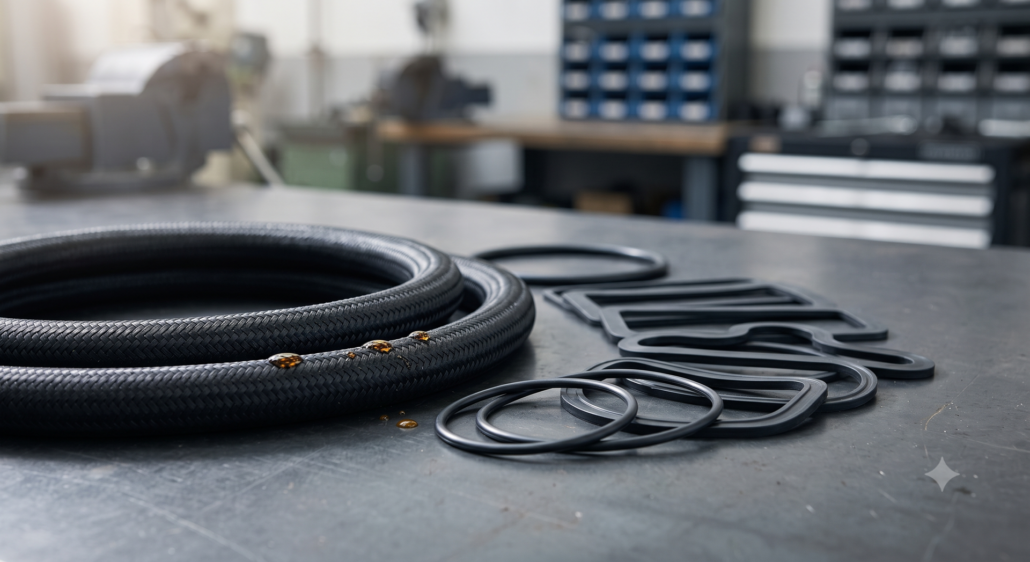
Nitrile Rubber (NBR) Philippines | Oil & Fuel Resistant Seals
Nitrile (NBR) rubber is a cost-effective choice for oil and fuel seals. Its acrylonitrile content gives strong resistance to petroleum-based oils and fuels while keeping useful flexibility for sealing. Higher ACN improves fuel resistance but reduces low-temperature resilience. Standard NBR suits moderate service temperatures and routine exposure. For hotter or more aggressive media, Viton or modified NBR blends may perform better, and the right grade depends on hardness, media, and operating load.
Key Takeaways
- Nitrile rubber (NBR) resists petroleum oils and fuels well because its acrylonitrile content increases polarity.
- Higher acrylonitrile improves fuel resistance but also makes NBR stiffer and less flexible in cold temperatures.
- Typical NBR suits moderate-temperature oil and fuel sealing, usually around 108–120°C service limits.
- For gasoline and diesel, ACN around 35–45% gives a practical balance of resistance, flexibility, and processability.
- For ethanol, biodiesel, or hotter aggressive fuels, XNBR, Viton, or specially compounded blends usually perform better.
What Makes Nitrile Rubber Good for Fuel Seals?
Nitrile rubber earns its place in fuel seals through the acrylonitrile in its structure, which gives it strong resistance to petroleum oils and fuels while keeping enough flexibility for sealing. Its chemistry supports Chemical compatibility with many hydrocarbon fuels, and the balance of acrylonitrile content helps reduce swelling without making the seal brittle. Good resilience lets it keep contact pressure through repeated service, while strong tensile, tear, and abrasion resistance support long use. Proper vulcanization and reinforcing fillers tighten the network and slow fuel diffusion, improving dimensional stability. Low compression set matters as well, since seals stay shaped under load. For many automotive and industrial fuel systems, this combination gives NBR a practical, familiar fit.
How Does NBR Compare With Viton?
Compared with Viton, NBR is the more economical choice for routine oil and fuel seals, offering strong resistance to petroleum-based fluids and good abrasion performance at moderate temperatures. In a direct cost comparison, NBR usually fits standard service needs better, while Viton serves teams that need higher chemical resistance and stronger thermal stability. Viton handles elevated temperatures far beyond NBR’s practical range and is preferred where long service life, hot media, or aggressive fuels are expected. NBR remains a reliable material for common seals, but it can be less suitable in severe chemical exposure or high-heat duty. For many applications, the choice is simple: NBR for value and everyday fuel resistance, Viton for demanding conditions that justify the higher price.
How ACN Content Affects NBR Performance
ACN content is one of the main variables that determines how NBR performs in service. Higher ACN raises polarity, improving resistance to aliphatic hydrocarbons and petroleum fuels, but it also stiffens the rubber and sharpens cold‑flexibility limits. The balance is clear: more fuel resistance, less low‑temperature resilience.
| ACN level | Effect |
|---|---|
| Low | Better flexibility |
| Mid | Balanced service |
| High | Strong fuel resistance |
| >40% | Better gasoline resistance |
| High ACN | More brittleness |
These ACN tradeoffs shape sealing grades used in industry. Controlled ACN tuning helps teams choose a compound that fits fuel exposure, processability, and mechanical demand. At the same time, high ACN can reduce elongation and increase sensitivity to polar solvents.
Why Use XNBR or NBR Blends?
XNBR and tailored NBR blends are used when standard nitrile no longer provides enough fuel resistance or dimensional stability. Carboxyl groups in XNBR raise polarity and tighten intermolecular forces, helping reduce swelling in gasoline, diesel, and ethanol blends. For fuel compatibility, ACN levels near 35–45% remain important, but XNBR can deliver stronger multi-fuel performance at similar ACN content. Blend strategies also matter: higher crosslink density and barrier fillers slow permeation, while polar partners such as CPE, PVC, or small fluoroelastomer additions improve ethanol and biodiesel resistance. These approaches support the group that needs longer sealing life, though they can raise cost and reduce low-temperature flexibility. Tailored cure systems often keep performance balanced for demanding service.
Nitrile Rubber Sheet, Strip, and Gasket Options
Nitrile rubber sheet-and-strip stock is widely used for oil- and fuel-resistant seals, with black NBR sheet commonly held at 1200 mm width and sold by the metre in grades such as 65–70 Shore A for gasket fabrication. White FDA-approved NBR sheet is also available for food-grade service, supplied the same way. Buyers can choose from solid or closed-cell expanded forms, with sheet thicknesses matched to compression, oil exposure, and stability needs. Strip extrusions come in many widths and are sold per metre; custom profiles can be made on request. For sealing faces, NBR gaskets may be die-cut or water-jet cut to flange dimensions, or from sketches and samples. Bespoke extrusion runs usually start at about 100 metres.
How to Choose NBR Grade and Hardness
Selecting the right NBR grade starts with the fuel itself: around 35–45% acrylonitrile gives a practical balance for gasoline and diesel, while higher ACN improves hydrocarbon resistance at the expense of low-temperature flexibility. For a team specifying seals, compound selection should follow service needs, not habit.
- Grade: use balanced ACN for mixed fuels; choose XNBR or specially compounded NBR for ethanol or biodiesel blends.
- Hardness: 60–70 Shore A suits most oil-resistant gaskets, softer 30–50 Shore A fits dynamic seals, and ≥70 Shore A helps resist extrusion.
- Context: match fillers, additives, and processing conditions to reduce swelling and ageing; standard NBR is reliable to about 108–120°C, beyond which another elastomer may belong.
Need a Custom Nitrile Gasket?
Need a custom nitrile gasket? Many teams do. Custom NBR parts can match flange dimensions, sketch, or sample, with custom tolerances set to fit. Standard black sheet is 1200 mm wide and sold by the metre.
| Option | Use | Notes |
|---|---|---|
| CNC cutting | Accurate shapes | Fast |
| Die-cutting | Higher volume | Consistent |
| Waterjet profiling | Complex forms | Clean edges |
| White FDA NBR | Sanitary service | Compliance |
| Black NBR | Oil and fuel | Common grade |
Lead times vary by complexity. Surface finishes can be specified. Certification options may include material certificates. For fuel service, state ACN content, hardness, media, temperature, and load. That lets the supplier guide the right fit, and helps the user stay in the same reliable group.
Frequently Asked Questions
What Temperature Range Can NBR Handle?
NBR typically handles about -30°C to 100°C; some grades reach 120°C. High temperature limits risk thermal degradation, while low temperature can reduce flexibility range. Users seeking reliable service should match grade to application conditions.
Is NBR Suitable for Drinking Water?
NBR is usually not suitable for drinking water unless specifically certified for potable seals. Some grades allow food contact, but approval varies. For a shared, trusted system, certification should be checked before use.
Can NBR Be Used Outdoors in Sunlight?
Not ideal outdoors, it can suffer uv degradation and color fading in sunlight. Groups needing durable outdoor service typically choose UV-stable materials or add protective coatings, since nitrile alone offers limited weather resistance.
How Long Does NBR Last in Service?
Service life varies widely, often from a few years to decades, depending on heat, oils, stress, and ozone. Degradation mechanisms usually dominate gradually, so well-chosen grades and conditions help users stay confident and prepared.
Is NBR Recyclable or Reusable?
Yes; it can be recycled, though not easily by conventional means. Chemical recycling and regenerative blending can recover some value from scrap. Reusability depends on contamination, wear, and application demands, with limited practical reuse.
Conclusion
Nitrile rubber remains a practical choice for oil and fuel sealing because it offers strong resistance, solid mechanical performance, and broad availability. Its usefulness depends on ACN content, hardness, and the exact service environment. While Viton performs better in harsher chemical and heat conditions, NBR is often the more economical option. XNBR and blended compounds can extend performance further. For many gasket and seal applications, the right NBR grade delivers dependable, cost-effective protection. This overview is brought to you by RK Rubber Enterprise Co., a trusted rubber supplier and manufacturer in the Philippines committed to delivering high-quality, cost-efficient rubber solutions and expert support for diverse industrial needs.