Rubber Couplings for Pumps | Vibration & Misalignment Control
Rubber couplings join pump and motor shafts with a flexible elastomer insert between metal hubs. They absorb shock, reduce vibration, and tolerate small angular, parallel, and axial misalignment. This lowers bearing and seal stress, cuts noise, and helps protect the drivetrain from peak torque. Common forms include tyre, jaw, star, and spacer couplings. Proper material and torque selection are important. Their failure modes and maintenance benefits become clearer with a closer look.
Key Takeaways
- Rubber couplings transmit torque while absorbing shock, vibration, and moderate pump-motor misalignment.
- They use replaceable elastomer inserts, so wear parts can be changed without replacing the metal hubs.
- Common types include tyre, spider, jaw, and spacer couplings for light to medium pump duty.
- Proper material selection, such as EPDM, neoprene, or urethane, depends on temperature, chemicals, and wear demands.
- Regular inspection for cracking, hardening, or extrusion helps prevent failure, seal damage, and unplanned downtime.
What Is a Rubber Coupling
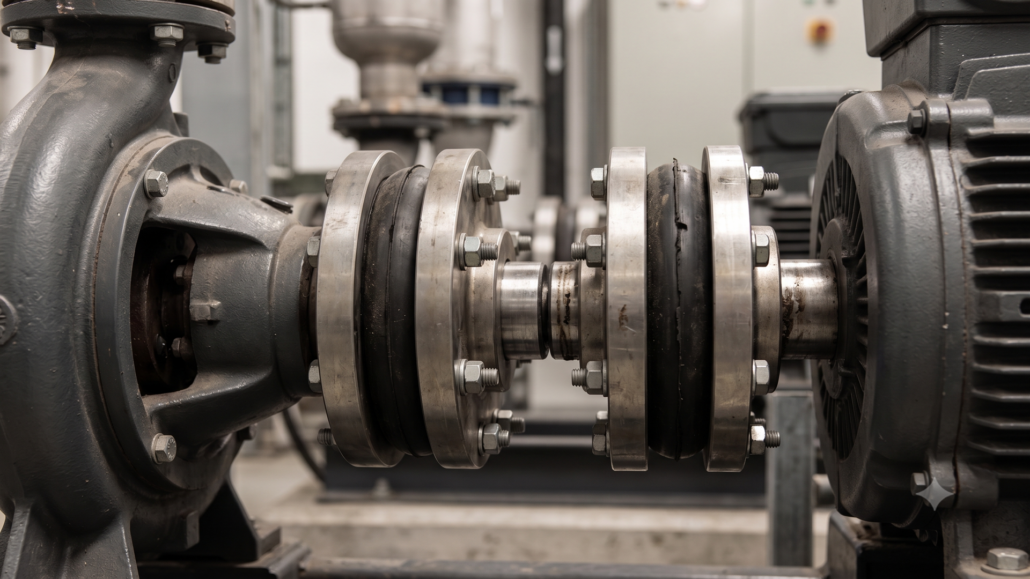
A rubber coupling is an elastomeric, or tyre, coupling that uses a replaceable rubber, urethane, or EPDM insert between two metal hubs to transmit torque in pump-motor drives while reducing shock and vibration. It gives teams a simple path to vibration isolation in small to mid-sized pumps. The insert flexes enough to accept moderate angular, parallel, and axial misalignment, which helps the drive stay aligned without complex hardware. Typical units need no lubrication and little routine attention. When wear or rupture occurs, the insert can be changed onsite. Installation tips are straightforward: match the elastomer to the service environment, confirm hub fit, and set alignment before tightening. Some spacer styles also allow back pull-out for seal work without moving the motor.
Why Rubber Couplings Protect Pumps
Rubber couplings protect pumps by absorbing shock loads and torsional vibration before they reach the shaft and seals. This shock absorption supports shaft protection and steadier operation. Small angular, parallel, and axial misalignment is tolerated, reducing bearing stress and seal wear. The result is less fatigue, lower noise, and fewer leak paths.
| Benefit | Effect |
|---|---|
| Shock absorption | Reduces peak torque |
| Shaft protection | Limits damage from misalignment |
| Damping | Lowers vibration and noise |
| Graceful failure | Insert changes, not hub loss |
Elastomeric inserts often shear first, so the pump drive is spared costly failure. No lubrication is required. Maintenance stays simple. For teams that value uptime and clean service, this design keeps pumps reliable, quiet, and easier to own.
Rubber Coupling Types for Pump Systems
Several rubber coupling types are used in pump systems, each shaped for a different maintenance and duty requirement. Elastomeric couplings use two metal hubs with a replaceable rubber insert, often a tyre or spider. They suit small to mid-sized pump and motor sets, giving torsional damping, noise mitigation, and no-lube service. Rubber jaw and star couplings are compact and light, handling angular, radial, and small axial offset in light to medium duty service. UNEFLEX tyre couplings add a spacer flange, letting the pump shaft assembly be pulled back for seal or bearing work without shifting the motor. These designs favor quick insert replacement and low downtime. Temperature and chemical limits still apply, so the elastomer must match the duty.
How to Choose the Right Rubber Coupling
To choose the right rubber coupling, the pump duty must be matched to the elastomer, the torque, and the service layout. Material selection comes first. EPDM suits hot water and steam, neoprene fits oils, and urethane serves high-wear conditions. Temperature and chemical exposure set the limit. Next, torque sizing must exceed continuous load and starting surge, while staying within the range suited to small-to-mid sized pumps. Misalignment allowance also matters: rubber couplings accept angular and parallel offset and soften shock, helping reduce bearing load. In many pump teams, this gives a steadier drive. Service needs should be checked too. Elastomer inserts are low-maintenance, field-replaceable, and need no lubrication, but chemical or thermal damage should be watched and inserts renewed before failure.
Rubber Spacer Couplings for Easy Maintenance
Spacer couplings extend the maintenance advantages of rubber drive elements into pump assemblies that need frequent service access. They use a replaceable elastic tyre between metal hubs and a spacer flange, so the motor stays put during pump pull-out. Standard DBSE keeps seals and bearings reachable.
| Feature | Service gain |
|---|---|
| Easy replacement | Quick on-site tyre change |
| Spacer benefits | Back pull-out without driver removal |
| Industry fit | Paper, textile, chemical, marine, food |
The rubber insert absorbs shock and handles axial, angular, and parallel misalignment. That gives crews a familiar, practical setup. In centrifugal pumps, this means less dismantling, lower labor, and shorter downtime. UNEFLEX spacer rubber couplings support teams that need clean maintenance steps and minimal equipment movement. They fit sites where service speed matters and the drive must remain aligned, ready, and accessible.
Common Rubber Coupling Failures and Repairs
Rubber coupling failures most often begin with the elastomeric insert, which can crack, harden, or extrude from chemical attack, ozone, heat, misalignment, or repeated shock loads. In service, thermal aging raises stiffness and loss of elasticity, while spline wear can signal broader drivetrain distress. Measured alignment within manufacturer limits reduces edge loading and protects bearings and seals. Repeated torque spikes should be compared with coupling rating; if start or impact torque is near capacity, the coupling should be upsized or upgraded. Oil, solvents, and aggressive process chemicals can ruin common elastomers fast. Routine inspection for cracks, voids, extrusion, and hardness loss supports simple onsite repair. Replacing the insert during planned maintenance is usually the least expensive fix and helps the team avoid secondary damage.
Where Rubber Couplings Work Best in Industry
Beyond failure modes, the strongest fit for rubber couplings is in small-to-mid-sized pump-motor sets where shock, vibration, and modest misalignment are routine. They suit teams that need steady service without constant attention. In paper mills, textiles, food processing, marine service, irrigation, and mining, elastomeric couplings handle angular, parallel, and axial movement while staying dry and lubrication-free. Their rubber inserts, often EPDM, neoprene, or urethane, damp noise and are easy to replace in the field. UNEFLEX tyre spacer designs also help crews pull seals or bearings without shifting equipment. On offshore platforms and in HVAC systems, they perform well when torque stays moderate and temperatures remain controlled. They are not the choice for severe heat or harsh chemicals.
Frequently Asked Questions
How Often Should Rubber Couplings Be Inspected?
They should be inspected regularly, typically monthly, and after unusual vibration or overheating. Maintenance checks should assess wear, thermal expansion, and chemical resistance to guarantee reliable service and preserve the system’s sense of shared stability.
Can Rubber Couplings Handle Continuous High-Speed Operation?
Generally, they can, but only if rated for it. Continuous high-speed operation may reduce vibration isolation and accelerate thermal degradation. Proper sizing, alignment, and load control help preserve performance and prevent failure.
Do Rubber Couplings Require Lubrication?
Rubber couplings typically require no lubrication. Their operation depends on friction analysis and elastic flexibility, not oil. Excess lubricant can accelerate thermal degradation, so the shared practice is clean, dry, and properly aligned components.
How Long Do Rubber Coupling Inserts Typically Last?
Rubber coupling inserts typically last 3 to 7 years, sometimes longer with moderate load. Temperature effects and chemical resistance strongly influence service life. Proper alignment and routine inspection help users keep systems reliable.
Are Rubber Couplings Compatible With Stainless Steel Hubs?
Yes, rubber couplings are generally compatible with stainless steel hubs. Compatibility depends on chemical resistance, thermal expansion, and proper fit. They can serve reliably when material selection and installation align with system requirements.
Conclusion
Rubber couplings remain a practical choice in pump and motor systems because they absorb shock, reduce vibration, and help protect connected equipment. Their value depends on correct sizing, proper alignment, and regular inspection. Spacer designs improve service access, while application demands determine the best type. When selected and maintained well, these couplings support smoother operation, longer component life, and fewer unplanned shutdowns across many industrial settings.
This article was created by RK Rubber Enterprise Co., a trusted rubber supplier and manufacturer in the Philippines committed to delivering high-quality, cost-efficient rubber products and expert support for industrial applications.