
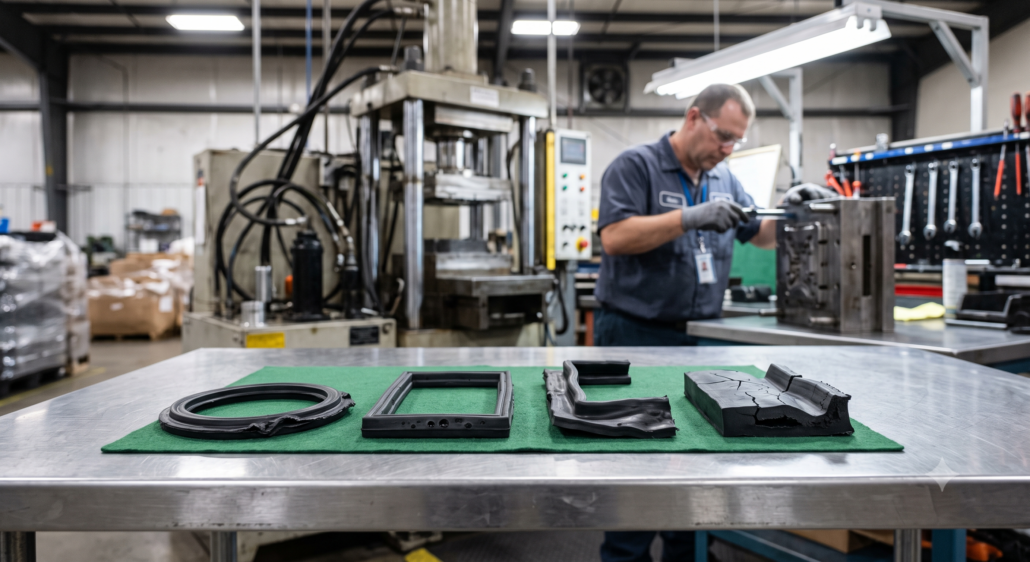
Common Rubber Molding Defects and How to Prevent Them
Common rubber molding defects include flash, voids, short shots, surface blemishes, and incomplete cure. Flash usually comes from weak clamp force, worn parting lines, debris, or excess pressure. Voids and short shots often trace to blocked vents, poor flow, or low shot size. Blemishes and tacky parts point to contamination, moisture, or uneven heat. Prevent them with clean molds, thin release agent, balanced fill, stable temperature, and regular maintenance. More detail follows.
Key Takeaways
- Flash occurs when rubber escapes at parting lines; prevent it with proper clamp force, clean tooling, and correct mold alignment.
- Void and air-trap defects result from blocked vents, trapped moisture, or uneven flow; keep vents clear and balance fill conditions.
- Short shots happen when cavities do not fully fill; increase shot size, improve gate and runner flow, and raise fill speed if needed.
- Surface blemishes and poor finish often result from contamination, excess release agent, or moisture; clean molds and apply release thinly.
- Incomplete cure causes soft or brittle parts; maintain uniform mold temperature and verify cure time against the compound’s cure curve.
Common Rubber Molding Defects and Causes
Common rubber molding defects typically reflect a mismatch between tooling, process settings, and compound behavior. Flash shows as thin seams when clamping is low, pressure is high, vents are weak, or tooling is worn. Short shots appear when the cavity receives too little material, too little speed, or a gate, runner, or vent is restricted. Voids and air traps form from poor venting, high viscosity, or uneven flow. Incomplete cure leaves parts soft, tacky, or brittle when heat or time is off. Surface defects such as dullness, burn, sticking, or splay often follow contamination, excess release, moisture, or rough surfaces. Careful material selection and routine equipment maintenance help teams avoid these issues together.
Flash, Voids, and Short Shots
Flash, voids, and short shots usually point to imbalance between mold closure, venting, and flow. Flash appears when rubber escapes at parting lines, often from weak clamp force, worn edges, debris, poor mold alignment, or excess pressure. Voids show trapped gas or moisture, usually from blocked vents, high viscosity, or uneven fill. Short shots arise when the cavity never fills, often from low shot size, restricted runners, undersized gates, or an unbalanced multi-cavity setup. Routine cleaning, polishing, and repair help, as does checking venting, mold temperature, and cure cycles. Pressure profiling should be verified, and shot weight confirmed. For the team, data beats guesswork: log fill balance, temperatures, pressure, and vent status, then correct the source.
Surface Blemishes and Incomplete Curing
Surface blemishes often point to contamination, residue buildup, worn or rough mold surfaces, or mold temperatures high enough to degrade pigments, leaving dull spots, streaks, pitting, or mottling. In most cases, surface contamination can be reduced by steady cleaning, light polishing, and limiting release-agent buildup. For teams seeking consistent parts, the goal is a clean cavity and stable heat. Incomplete curing appears as soft, tacky rubber with weak elasticity when the vulcanization cycle is too short or too cool for the elastomer.
- Verify mold temperature zones.
- Track cure validation against cure curves.
- Confirm uniform heating across the cavity.
- Extend hold time in small steps.
- If needed, stabilize temperature first.
How to Maintain Rubber Molds
Maintaining rubber molds begins with disciplined post-cycle care. After each run, crews remove residue, inspect vents, and confirm parting-line fit. Preventive inspections catch flash paths, blocked vents, and wear before defects spread. Temperature zones should be logged with thermocouples, and heating controls recalibrated often so cure remains even. Worn cavity edges may be polished or chrome-plated, while damaged seals, vents, and inserts are replaced to protect dimensions and reduce scrap. Lubrication and compatible release agents are applied sparingly and consistently, matched to compound and process heat. Inventory management keeps these parts ready. Data reviews of cavity balance, vent efficiency, and scrap rates guide preventive maintenance, helping teams hold stable cycles and stay aligned.
Why Release Agents Matter in Rubber Molding
Release agents matter because they help parts eject cleanly without sticking or tearing, provided the product matches the rubber compound and cure temperature.
- Compatibility testing confirms the film suits the compound.
- Application timing keeps coverage thin and even.
- Spray, wipe, or dosing methods limit excess buildup.
- Proper selection reduces flash, dulling, and weak edges.
- Residue removal preserves vents and surface finish.
A compatible, thin-film release supports vulcanization and steady cure. When overused, it can leave blemishes, mottling, or poor edge integrity. In practice, the molding team benefits from routine review of release-agent performance and modest adjustments to spray frequency. That discipline lowers scrap, protects molds, and helps parts leave the tool in the same clean state every time.
Process Controls That Prevent Defects
Consistent process control is the main defense against rubber molding defects. Temperature uniformity across the cavity, held within ±5°C, supports even vulcanization and clean surfaces. Gate design, runners, and vents should match the part and be checked often; vents near 0.05–0.15 mm help air escape.
| Control | Purpose |
|---|---|
| Mold temperature | Prevent incomplete cure and mottling |
| Clamp pressure and speed | Reduce flash and short shots |
| Compound temperature | Improve flow without early cure |
| Maintenance and dosing | Limit contamination and sticking |
Pressure sensors and cycle logs help teams keep settings steady. Preheated feed material should reach the target viscosity in the data sheet. Routine cleaning and measured release-agent dosing preserve vent function and surface quality. These controls help the shop stay consistent together.
Fast Rubber Molding Troubleshooting
When defects appear, fast troubleshooting starts with the same controls that keep molding stable. Rapid troubleshooting begins with defect diagnostics on mold cycling, charge, and cure. A steady team checks the basics, then narrows the fault.
- Verify mold temperature uniformity; ±5 °C gaps, low heat, or excess heat point to short shots, cold flow, foaming, or early cure.
- Confirm shot size and injection speed each cycle; low charge or slow fill invites voids, while speed can raise flash and jetting.
- Clean vents and parting lines; trapped air and poor alignment cause voids and flash.
- Audit cure time against T90, then adjust hold time when tack or brittleness appears.
- Use pressure troubleshooting and release-agent logs to separate sticking, cold flow, and surface blemishes.
Frequently Asked Questions
Which Common Injection Molding Defects Have You Faced Before How You Fix Them?
Air entrapment and flash formation were noted most often. He would clear vents, balance fill, raise clamp force, and reduce pressure. She would also check temperatures and viscosity, seeking steady parts and shared confidence in the process.
Conclusion
In rubber molding, defects usually trace back to mold condition, process instability, or poor material handling. Flash, voids, short shots, blemishes, and incomplete curing can often be reduced through routine mold maintenance, proper use of release agents, and tighter control of temperature, pressure, and cure time. Quick troubleshooting helps isolate the source before waste grows. Consistent inspection and disciplined process control remain the most effective safeguards against repeat defects and costly rework. As a trusted rubber supplier and manufacturer in the Philippines, RK Rubber Enterprise Co. continues to apply these principles in delivering cost-efficient, high-quality rubber products, while also providing expert support and installation services to help clients achieve reliable results.