rubber density

Rubber Density & Weight | Product Design Considerations

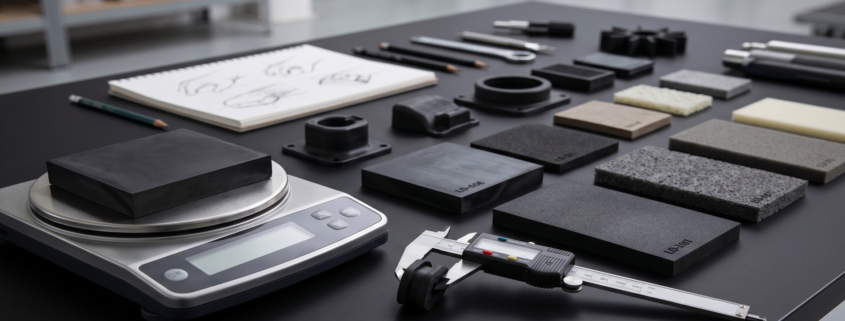
Rubber density is mass per unit volume, usually reported in kg/m³ or g/cm³, and it sets part weight in product design. A given volume becomes heavier as density rises, which affects cost, shipping, and buoyancy. Most compounds fall near 1.0 to 1.5 g/cm³, though fillers can push them higher and foams can lower them. Accurate design uses finished compound density, measured by ASTM D297 or ISO 2781. More details follow.

Key Takeaways

  • Rubber density is mass per unit volume, typically reported in g/cm³ or kg/m³, and finished compound density matters for design.
  • Part weight equals volume multiplied by density, so even small density changes can significantly affect shipping, cost, and handling.
  • Common rubber densities range from about 1.0 to 1.5 g/cm³, but fillers and polymer type can shift values much higher.
  • Fillers like carbon black and calcium carbonate usually increase density, while hollow microspheres and foaming can reduce it.
  • Measure density using standards such as ASTM D297 or ISO 2781, and specify temperature, units, and compound state.

What Is Rubber Density?

Rubber density is the mass per unit volume of a rubber material, expressed as ρ = m/V and typically measured in kg/m³ or g/cm³. It reflects how tightly matter is packed in the rubber microstructure and how fillers, pigments, plasticizers, and cure systems change the finished compound. Typical values range from about 0.86 to 2.02 g/cm³, depending on the polymer family. Natural rubber, NBR, EPDM, neoprene, silicone, and FKM each sit in different ranges. Finished compound density matters more than raw polymer density because it gives the practical design value. It also influences thermal expansion behavior and helps teams compare materials consistently. ASTM D297 and ISO 2781 are common test standards.

How Rubber Density Affects Part Weight

Part weight rises and falls with compound density, because mass equals volume multiplied by ρ. A gasket of 100 cm³ at 1.30 g/cm³ weighs 130 g; the same shape in a lighter compound weighs less. The base polymer alone does not decide mass. Fillers and additives shift finished density, and that shift changes final weight. For weight prediction, CAD volume should be paired with target compound density early in design. Thickness or hardness changes do not reliably forecast mass. Small density moves matter in production: a 1.20 g/cm³ sheet replaced by 1.30 g/cm³ adds about 8.3% weight, affecting cost and shipping. Buoyancy implications also matter in water-contact parts, where density relative to water determines whether a part floats or sinks.

Common Rubber Density Ranges

Typical rubber compounds cover a wide density band, from about 0.86 to 2.02 g/cm³, though many fall between 1.0 and 1.5 g/cm³. Natural rubber often sits near 1.0 to 1.1 g/cm³, which suits teams seeking light, elastic parts. Nitrile rubber is commonly around 1.22 g/cm³, a familiar choice for seals that must feel dependable. Silicone rubbers usually range from 1.00 to 1.35 g/cm³, while specialty elastomers such as FKM can approach 1.8 to 2.02 g/cm³. In practice, Polymer blends help define the final range, and Microcellular foams can lower it sharply in lightweight designs. This spread gives designers a clear place to match material behavior with weight targets, without drifting far from proven rubber families.

How Fillers and Plasticizers Change Density

Added fillers usually raise rubber densitycarbon black, silica, and calcium carbonate can push a base compound from about 1.0–1.3 g/cm³ toward roughly 1.3–2.0 g/cm³, depending on type and loading. Dense fillers add mass fast, so part weight and material cost rise with every added percent by volume. Good filler dispersion helps keep the change uniform across a batch. Hollow glass microspheres and aerogels can limit that rise and deliver lighter compounds than solid mineral fillers. Plasticizers usually do the opposite, lowering density and improving flexibility. Too much can weaken tensile strength and shift processing or cure behavior. Plasticizer migration can also change properties over time, so the group working with the compound should treat density as a designed outcome, not a fixed starting value.

How to Test Rubber Density

Rubber density is commonly measured by Archimedes’ principle, using weight in air (W1) and weight submerged in water (W2) to calculate ρ = W1 / (W1 − W2), with results reported in g/cm³ or kg/m³ under ASTM D297 or ISO 2781. Clean, fully cured sample preparation limits error, and temperature should match the standard.

Method Best use Note
Archimedes Solid parts Direct, common
Pycnometer Powdered or small samples Higher precision
Bulk density Foamed rubber Includes voids

Report the test standard, units, and temperature. Convert g/cm³ to kg/m³ by multiplying by 1000. Be alert to measurement uncertainty from fillers, porosity, moisture, and cell inhomogeneity. Orientation checks help foamed specimens reflect the shared product reality.

How to Choose the Right Rubber Density

When selecting rubber densitypart volume and target weight should be checked first, since mass follows directly from density and small shifts can affect cost, shipping, and material use. The next step is to match the compound to the duty. Low-density silicone foams or hollow-microsphere blends suit cushioning and insulation. FKM, with higher density, fits chemical exposure where mass and resistance matter. NBR supports oil service; EPDM suits weather and water; natural rubber suits high elasticity. Fillers raise density and strength, while plasticizers reduce density and add flexibility. Material compatibility and thermal expansion must stay aligned with the service environment. Before release, verify density from samples and CAD volume to keep the team confident, avoid surprises, and stay within spec.

Ways to Lower Rubber Density Without Weakening Parts

Lower density can be achieved without sacrificing part performance by changing the compound architecture rather than simply reducing material. Engineers often add hollow microspheres or gas-filled microspheres, cutting density up to 30% when loading is balanced. Controlled microcellular foaming, including silicone foams, can drive density near 0.2 g/cm³ with stable cells. A hybrid filler mix helps too:

Method Benefit Risk
Hollow microspheres Lower mass Dispersion must stay even
Microcellular foaming Very low density Cell control is critical
Lightweight fillers Keeps reinforcement Formulation tuning needed

Replacing part of carbon black or silica with hollow glass beads, aerogels, or polymer powders supports lighter parts. Tailored crosslinking and nanoreinforcements let the team thin walls and keep strength.

Frequently Asked Questions

Why Is Rubber Considered an Important Material in Manufacturing?

Rubber is important in manufacturing because it delivers durability, flexibility, and cost reduction while supporting seals, mounts, and rollers. Its versatility also improves aesthetic appeal, helping products perform reliably and feel part of a trusted group.

How to Measure the Density of Rubber?

Density is measured by buoyancy testing: weigh the rubber in air, then submerged in water, and calculate specific gravity or density from the loss of weight. Standard methods like ASTM D297 improve shared, repeatable results.

What Is High Density Rubber?

High density rubber is a high density elastomer or compressed rubber compound with density above 1.30 g/cm³, usually filled with heavy additives. It is heavier, stiffer, and more abrasion resistant than standard rubber.

Conclusion

Rubber density plays a direct role in part weight, performance, and material choice. Higher density compounds add mass, while lower density options can reduce weight and improve handling when strength remains sufficient. Fillers, plasticizers, and formulation changes all alter density, making testing and selection important. The right balance depends on function, durability, and cost. Careful control of density helps designers meet product goals without compromising part quality or reliability. For reliable rubber solutions and expert industry support, this article is brought to you by RK Rubber Enterprise Co.
rubber lining

Rubber Lining for Mining Pipes | Abrasion-Resistant Solutions

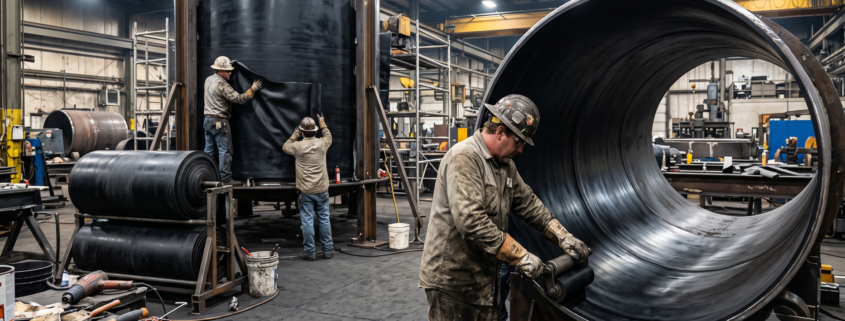
Rubber lining is used on mining slurry pipes and tanks to resist abrasionimpact, erosion, and corrosion from hard, angular solids and aggressive liquids. It forms a protective elastomer barrier, absorbs shock, and helps reduce turbulence and wear at elbows, inlets, chutes, and tank walls. Soft natural rubber suits high-impact service, while other compounds fit hotter or chemical duties. Correct installation and inspection extend service life, and the details behind that choice are worth knowing.

Key Takeaways

  • Rubber lining protects slurry pipes and tanks by isolating steel from abrasive particles, impact, cavitation, and corrosion.
  • It absorbs shock and reduces shell fatigue, extending service life in high-wear mining applications.
  • Common uses include elbows, hydrocyclone inlets, chutes, hoppers, mills, tanks, and thickeners.
  • Select rubber type and thickness based on slurry severity, with soft natural rubber common for impact and abrasion.
  • Proper surface prep, bonding, vulcanization, inspection, and repair are essential for long-lasting performance.

What Makes Mining Slurry So Hard on Equipment?

Mining slurry is hard on equipment because it combines severe abrasion, impact, erosion, and corrosion in one flow stream. Hard, angular mineral particles scrape metal, while particle impact from larger rocks deforms and tears exposed surfaces. In fast lines, especially at elbows, contractions, and pump inlets, hydraulic cavitation and high-velocity erosion thin walls and impellers. Mixed particle sizes make wear uneven, so damage rises faster than with dry abrasion alone. Once a surface opens, acids, alkalis, and salts can attack the base metal and shorten service life across a wide pH range. Poor flow geometry adds turbulence, noise, vibration, and frequent maintenance. Teams that work these systems know the pattern: slurry punishes weak spots first, then spreads failure fast across the circuit.

Why Rubber Lining Protects Slurry Pipes and Tanks

Rubber lining protects slurry pipes and tanks by creating a continuous elastomer barrier between the slurry and the steel substrate. This impermeable membrane blocks infiltration, slows corrosion, and helps extend service life in hard-wearing duty. Soft natural rubber compounds resist abrasion, cutting, and tearing, while neoprene or chlorobutyl add chemical, heat, and weather resistance when needed. The lining also provides impact damping, absorbing shock from ore and coarse aggregate so the shell sees less fatigue and surface damage. Vulcanized membranes restore smooth internal geometry, reduce turbulence, and lower pumping energy and erosion at elbows and transitions. Because the lining can be inspected and repaired locally, crews stay in control, downtime stays shorter, and lifecycle costs remain lower than replacing damaged steel.

Where Rubber Lining Fits Best in Mining Equipment

In slurry pipelines and pump boxes, rubber lining is most valuable where abrasive slurry moves at high velocity and a resilient internal barrier can extend service life by 15–20% over unlined steel. Chutes, hoppers, and mill feed boxes suit soft natural rubber because it absorbs drop energy in impact zones and resists cutting. Tanks and thickeners gain from vulcanized sheets that block corrosive liquor and protect steel after breaches.

Equipment Best fit
Elbows, passages Precision-lined to limit cavitation and erosion
Hydrocyclone inlets Durable at critical-velocity impact points

At thermal limits, rubber should stay within its service range; where dry abrasion dominates, ceramics can lead. Yet for teams managing impact, abrasion, and chemical attack, rubber remains the shared, repairable choice.

How To Choose the Right Rubber Lining

To choose the right rubber lining, the slurry chemistry and wear pattern must lead the decision: soft natural rubber, typically 35–65 Shore A, suits high-impact abrasive service, while neoprene or chlorobutyl, at 45–65 Shore A, better handles oil, caustic, heat, and FGD or outdoor tank exposure. Compound selection also should reflect particle size and velocity, since heavier wear zones often need 12–25 mm thickness for longer life. Elbows and passages benefit from smooth profiles that avoid offsets and sharp changes. Certified surface prep, bonding agents, and tested vulcanization support bond integrity and impermeability. Maintenance matters too; choose compounds that allow repair, and align installation timing with planned shutdowns so crews can inspect, replace, and protect the substrate before corrosion spreads.

How Rubber Lining Gets Installed

Once the lining material is selected, installation begins with strict substrate preparation: the steel is shot blasted to SSPC-SP 5 cleanliness with a controlled profile, then primed immediately to secure the bond. Surface cleanliness is checked before any sheet is placed, because the crew relies on it for a sound start. Rubber is then cut to size as calibrated sheets or preformed molds, set into position, and rolled to expel trapped air. Seam anchoring may be used at joints and penetrations to hold full contact. Cure method follows the job: autoclave, direct steam, or portable blankets with recorded heat, pressure, and time. Final checks include spark testing, thickness measurement, adhesion tests, and traceable records.

Rubber Lining vs. Other Mining Wear Linings

Compared with steel, ceramic, and other wear systems, rubber lining is often chosen when mining slurry service combines abrasion with impact, vibration, or thermal cycling. Its elasticity absorbs shock, limiting cracking where rigid ceramic alternatives perform best only in pure abrasion and high-velocity, low-impact streams. Soft natural rubber, typically 35–65 Shore A, suits coarse ore in pipes and pump boxes, while compound choice and thickness tune life to particle size, velocity, chemistry, and temperature. Rubber can extend service life by 15–20%, often reaching 10–20 years when specified well. It is fully impermeable to corrosive slurry and can be repaired in place. Against steel overlays and many polymer composites, it offers a practical balance of durability, downtime control, and cost.

Inspection, Repairs, and Emergency Support

Inspection begins with spark testing, thickness checks, and close visual review to catch breaches before slurry reaches the steel. Teams use the findings to forecast failure, set repair priority, and protect the liner community.

Check Purpose
Spark test Finds pinholes
Thickness gauge Tracks wear loss
Visual review Spots cracks and edge lift
Records Support warranty documentation

When damage is small, cold-bond or chemical-cure patching can restore service fast. When wear is broad, full stripping, relining, and steel repair follow, often with hot vulcanization or autoclave curing. Emergency logistics matter, and 24-hour response helps reduce downtime.

Inspection plans should match service severity. Reports should retain lot numbers, adhesion results, and photos so decisions stay traceable and the crew stands on firm ground together.

Frequently Asked Questions

What Are the Disadvantages of Rubber Lining?

Disadvantages include heat limits, chemical incompatibility, installation sensitivity, added weight, reduced bore, and higher pumping energy. Severe gouging can overwhelm abrasion resistance, so careful chemical compatibility and handling are essential.

What Is the Rubber Lining in Tanks?

Rubber lining in tanks is a bonded elastomer barrier protecting metal interiors from slurry, chemicals, and gas. It offers chemical resistance, absorbs impact, and accommodates thermal expansion, helping crews extend service life and reduce downtime.

What Is the Alternative to Rubber Lining?

Alternatives to rubber lining include ceramic tiles, polyurethane, hardfacing, HDPE, and synthetic coatings. Each suits different wear, impact, and temperature conditions, allowing teams to choose a shared, durable solution for slurry service.

What Is the Difference Between FRP Lining and Rubber Lining?

FRP lining is rigid, thin, and better for chemical compatibility; rubber lining is thicker, flexible, and better for abrasion and impact. Their installation methods also differ: FRP is brittle, rubber is easier to repair.

Conclusion

Rubber lining remains a practical defense against the abrasive, corrosive demands of mining slurry. It helps extend pipe and tank service life, reduce leaks, and lower maintenance downtime when properly selected and installed. Its performance depends on matching the lining to slurry chemistry, temperature, and impact conditions. Compared with harder alternatives, rubber often offers a balanced mix of wear resistance and flexibility. Regular inspection and timely repair are essential to preserve protection and reliability. RK Rubber Enterprise Co. stands as a trusted rubber supplier and manufacturer in the Philippines, providing high-quality rubber products, expert support, and installation services to help ensure dependable performance in demanding mining applications.

Rubber vs Plastic vs Silicone | Industrial Material Guide

Rubber, plastic, and silicone serve different jobs. Rubber is best for stretch, recovery, damping, and seals. Plastic is usually more rigid, with good wear and chemical resistance for housings and static parts. Silicone sits between them: flexible, heat stable, weather resistant, and strong in outdoor or steam exposure. It often costs more, but lasts longer in harsh conditions. The right choice depends on heat, chemicals, and function, and the tradeoffs become clearer below.

Key Takeaways

  • Rubber is best for elasticity, damping, and vibration control in seals and shock-absorbing parts.
  • Plastic suits rigid, wear-resistant parts that need stable shape and good chemical resistance.
  • Silicone excels in extreme temperatures, UV, ozone, steam, and outdoor or biocompatible environments.
  • Silicone is less wear-resistant than many rubbers but stays flexible longer across repeated thermal cycling.
  • Choose by duty, chemicals, temperature, cost, and lifecycle needs, not just material name.

What’s the Difference Between Rubber, Plastic, and Silicone?

Rubber, plastic, and silicone serve different jobs by design. Their material origins shape their use. Rubber is a carbon-chain elastomer, natural or synthetic, built for stretch, recovery, and wear. Plastics are usually thermoplastics such as PE, PP, PVC, and PTFE; they soften with heat and hold shape well. Silicone uses a siloxane backbone, so it stays flexible across wide temperatures and resists UV, ozone, and steam. In application examples, rubber fits seals and vibration control, plastics suit rigid parts and static housings, and silicone appears in harsh environments or biocompatible parts. Cost and recycling also differ. Plastics are often cheaper and easier to recycle. Rubber sits in the middle. Silicone costs more, yet lasts longer where conditions are severe.

Rubber Vs. Plastic Vs. Silicone by Performance

Performance separates these three materials quickly. Rubber leads where elastic damping, compression recovery, and vibration control matter, so seals and shock parts feel reliable in the hand. Plastics lead when wear resistance, chemical exposure, and stable surface finish are the priority; PTFE, PEEK, and PVC often hold up better than many elastomers in acids, oils, and solvents. Silicone earns its place when thermal cycling, outdoor weathering, electrical insulation, or steam exposure are expected. It stays flexible across a far wider temperature range than common engineering plastics and most thermoplastics. Yet it usually costs more and is not as easy to recycle. In practice, the best choice is the one that fits the duty, not the label on the shelf.

How Silicone Compares to Rubber and Plastic

Silicone sits between rubber and plastic, but in a distinct way: it behaves like an elastomer while holding flexibility from about −50 to 230°C, with some grades tolerating short peaks far higher. For teams seeking reliable, flexible durability, it offers steady service.

Material Typical edge
Silicone Ozone, UV, weathering, steam, biocompatibility
Rubber Abrasion, tensile strength, compression set
Plastic Chemical resistance, lower cost, recyclability
Silicone vs. both Better thermal aging resistance, longer life in harsh exposure

Compared with standard rubber, silicone usually gives up wear strength, yet keeps shape and softness longer under exposure. Compared with plastic, it is less rigid and often pricier, but better when sealing, comfort, or sterilization matter. The result is a practical middle ground for communities that value durability and consistency.

How They Compare in Heat

In heat, silicone stands apart for range and stability. Its high temperature resilience holds across roughly −50°C to +230°C, with brief service even higher in select grades. That span gives teams room when equipment moves from cold start to hot run. The cold flexibility comparison is also clear: silicone stays pliable where many plastics stiffen and crack, and where many rubbers begin to harden below freezing. Common thermoplastics usually sit far lower, often near 60°C to 140°C, and may warp or lose strength. Traditional rubbers can serve well at moderate heat, yet many fade past 120°C to 150°C. For thermal cycling, silicone offers the steadier path.

How They Handle Chemicals

Against chemicals, the comparison shifts: plastics such as PTFE and PVC usually provide stronger resistance to many acids, alkalis, oils, and solvents than standard silicone, making them a common choice for static, chemically aggressive service. Silicone still shows broad chemical compatibility with many media, but strong alkalis and hydrofluoric acid can attack it, and its solvent resistance is weaker against some fuels and hydrocarbons. Fluorosilicone closes part of that gap, adding better fuel, oil, and solvent resistance while keeping silicone’s weather and ozone stability. Traditional rubbers are not all alike: NBR, Neoprene, and EPDM each serve different exposures. For shared confidence, material grade, concentration, temperature, and fillers should be checked against chemical compatibility charts or supplier data before selection in demanding environments.

Cost, Sustainability, and Lifespan Compared

On cost, the ranking is straightforward: silicone usually carries a higher unit price than common plastics and many synthetic rubbers, yet its long service life can lower replacement rates and total cost over time. In lifecycle costing, the first price matters, but so do failures, downtime, and upkeep. For many teams, plastics remain the low-cost baseline, especially in volume; rubber often sits between plastic and silicone. Sustainability is less tidy. Commodity thermoplastics are easier to recycle, and TPEs can be reprocessed; cured silicone usually needs special programs. End‑of‑life analysis should also weigh durability, since fewer replacements can mean less material overall.

  • Lower unit cost
  • Longer service life
  • Easier recycling paths
  • Reprocessing advantage
  • Fewer replacements

How to Choose the Right Material for Your Part

Choosing the right material for a part depends on the operating environment and the function the part must perform. Silicone suits extreme temperatures, UV, ozone, steam, and biocompatible service. Plastics fit rigid, stable parts facing chemicals, low cost, and recyclability. Rubber serves seals and gaskets needing elasticity, damping, and recovery.

Material Best use Notes
Silicone Harsh heat, medical, food Higher upfront cost
Plastic Rigid chemical parts Check grades and recycling
Rubber Seals, dynamic joints Good abrasion resistance

Manufacturing tolerances, surface finishes, and assembly methods should match the chosen material. Regulatory testing confirms compliance. Lifecycle cost matters: silicone often lasts longer; plastics and TPEs may be cheaper. Material experts help verify compatibility, limits, and compound selection.

Frequently Asked Questions

What Is the Best Silicone for Rubber and Plastic?

Platinum-cured medical grade silicone is often best for replacing rubber and plastic parts, especially when flexibility, cleanliness, and durability matter. For bonding, silicone adhesives help. Material choice still depends on heat, chemicals, and tolerance needs.

Conclusion

In short, rubberplastic, and silicone each serve distinct needs. Plastic tends to offer low cost and broad versatility. Rubber provides strong flexibility and grip. Silicone stands apart for heat resistance, chemical stability, and longer service life. The best choice depends on the part’s operating conditions, budget, and durability requirements. No material is universally superior; each performs best when matched to the application. Careful selection reduces failure, waste, and replacement costs over time.

This article is brought to you by RK Rubber Enterprise Co., a leading rubber supplier and manufacturer in the Philippines committed to delivering cost-efficient, high-quality rubber products and dependable support for a wide range of industries.

rubber coupling

Rubber Couplings for Pumps | Vibration & Misalignment Control

Rubber couplings join pump and motor shafts with a flexible elastomer insert between metal hubs. They absorb shock, reduce vibration, and tolerate small angular, parallel, and axial misalignment. This lowers bearing and seal stress, cuts noise, and helps protect the drivetrain from peak torque. Common forms include tyre, jaw, star, and spacer couplings. Proper material and torque selection are important. Their failure modes and maintenance benefits become clearer with a closer look.

Key Takeaways

  • Rubber couplings transmit torque while absorbing shock, vibration, and moderate pump-motor misalignment.
  • They use replaceable elastomer inserts, so wear parts can be changed without replacing the metal hubs.
  • Common types include tyre, spider, jaw, and spacer couplings for light to medium pump duty.
  • Proper material selection, such as EPDM, neoprene, or urethane, depends on temperature, chemicals, and wear demands.
  • Regular inspection for cracking, hardening, or extrusion helps prevent failure, seal damage, and unplanned downtime.

What Is a Rubber Coupling

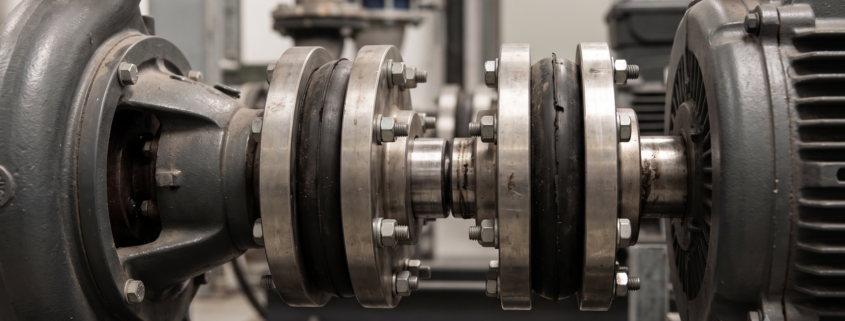
rubber coupling is an elastomeric, or tyre, coupling that uses a replaceable rubber, urethane, or EPDM insert between two metal hubs to transmit torque in pump-motor drives while reducing shock and vibration. It gives teams a simple path to vibration isolation in small to mid-sized pumps. The insert flexes enough to accept moderate angular, parallel, and axial misalignment, which helps the drive stay aligned without complex hardware. Typical units need no lubrication and little routine attention. When wear or rupture occurs, the insert can be changed onsite. Installation tips are straightforward: match the elastomer to the service environment, confirm hub fit, and set alignment before tightening. Some spacer styles also allow back pull-out for seal work without moving the motor.

Why Rubber Couplings Protect Pumps

Rubber couplings protect pumps by absorbing shock loads and torsional vibration before they reach the shaft and seals. This shock absorption supports shaft protection and steadier operation. Small angular, parallel, and axial misalignment is tolerated, reducing bearing stress and seal wear. The result is less fatigue, lower noise, and fewer leak paths.

Benefit Effect
Shock absorption Reduces peak torque
Shaft protection Limits damage from misalignment
Damping Lowers vibration and noise
Graceful failure Insert changes, not hub loss

Elastomeric inserts often shear first, so the pump drive is spared costly failure. No lubrication is required. Maintenance stays simple. For teams that value uptime and clean service, this design keeps pumps reliable, quiet, and easier to own.

Rubber Coupling Types for Pump Systems

Several rubber coupling types are used in pump systems, each shaped for a different maintenance and duty requirement. Elastomeric couplings use two metal hubs with a replaceable rubber insert, often a tyre or spider. They suit small to mid-sized pump and motor sets, giving torsional damping, noise mitigation, and no-lube service. Rubber jaw and star couplings are compact and light, handling angular, radial, and small axial offset in light to medium duty service. UNEFLEX tyre couplings add a spacer flange, letting the pump shaft assembly be pulled back for seal or bearing work without shifting the motor. These designs favor quick insert replacement and low downtime. Temperature and chemical limits still apply, so the elastomer must match the duty.

How to Choose the Right Rubber Coupling

To choose the right rubber coupling, the pump duty must be matched to the elastomer, the torque, and the service layout. Material selection comes first. EPDM suits hot water and steam, neoprene fits oils, and urethane serves high-wear conditions. Temperature and chemical exposure set the limit. Next, torque sizing must exceed continuous load and starting surge, while staying within the range suited to small-to-mid sized pumps. Misalignment allowance also matters: rubber couplings accept angular and parallel offset and soften shock, helping reduce bearing load. In many pump teams, this gives a steadier drive. Service needs should be checked too. Elastomer inserts are low-maintenance, field-replaceable, and need no lubrication, but chemical or thermal damage should be watched and inserts renewed before failure.

Rubber Spacer Couplings for Easy Maintenance

Spacer couplings extend the maintenance advantages of rubber drive elements into pump assemblies that need frequent service access. They use a replaceable elastic tyre between metal hubs and a spacer flange, so the motor stays put during pump pull-out. Standard DBSE keeps seals and bearings reachable.

Feature Service gain
Easy replacement Quick on-site tyre change
Spacer benefits Back pull-out without driver removal
Industry fit Paper, textile, chemical, marine, food

The rubber insert absorbs shock and handles axial, angular, and parallel misalignment. That gives crews a familiar, practical setup. In centrifugal pumps, this means less dismantling, lower labor, and shorter downtime. UNEFLEX spacer rubber couplings support teams that need clean maintenance steps and minimal equipment movement. They fit sites where service speed matters and the drive must remain aligned, ready, and accessible.

Common Rubber Coupling Failures and Repairs

Rubber coupling failures most often begin with the elastomeric insert, which can crack, harden, or extrude from chemical attack, ozone, heat, misalignment, or repeated shock loads. In service, thermal aging raises stiffness and loss of elasticity, while spline wear can signal broader drivetrain distress. Measured alignment within manufacturer limits reduces edge loading and protects bearings and seals. Repeated torque spikes should be compared with coupling rating; if start or impact torque is near capacity, the coupling should be upsized or upgraded. Oil, solvents, and aggressive process chemicals can ruin common elastomers fast. Routine inspection for cracks, voids, extrusion, and hardness loss supports simple onsite repair. Replacing the insert during planned maintenance is usually the least expensive fix and helps the team avoid secondary damage.

Where Rubber Couplings Work Best in Industry

Beyond failure modes, the strongest fit for rubber couplings is in small-to-mid-sized pump-motor sets where shock, vibration, and modest misalignment are routine. They suit teams that need steady service without constant attention. In paper mills, textiles, food processing, marine service, irrigation, and mining, elastomeric couplings handle angular, parallel, and axial movement while staying dry and lubrication-free. Their rubber inserts, often EPDM, neoprene, or urethane, damp noise and are easy to replace in the field. UNEFLEX tyre spacer designs also help crews pull seals or bearings without shifting equipment. On offshore platforms and in HVAC systems, they perform well when torque stays moderate and temperatures remain controlled. They are not the choice for severe heat or harsh chemicals.

Frequently Asked Questions

How Often Should Rubber Couplings Be Inspected?

They should be inspected regularly, typically monthly, and after unusual vibration or overheating. Maintenance checks should assess wear, thermal expansion, and chemical resistance to guarantee reliable service and preserve the system’s sense of shared stability.

Can Rubber Couplings Handle Continuous High-Speed Operation?

Generally, they can, but only if rated for it. Continuous high-speed operation may reduce vibration isolation and accelerate thermal degradation. Proper sizing, alignment, and load control help preserve performance and prevent failure.

Do Rubber Couplings Require Lubrication?

Rubber couplings typically require no lubrication. Their operation depends on friction analysis and elastic flexibility, not oil. Excess lubricant can accelerate thermal degradation, so the shared practice is clean, dry, and properly aligned components.

How Long Do Rubber Coupling Inserts Typically Last?

Rubber coupling inserts typically last 3 to 7 years, sometimes longer with moderate load. Temperature effects and chemical resistance strongly influence service life. Proper alignment and routine inspection help users keep systems reliable.

Are Rubber Couplings Compatible With Stainless Steel Hubs?

Yes, rubber couplings are generally compatible with stainless steel hubs. Compatibility depends on chemical resistance, thermal expansion, and proper fit. They can serve reliably when material selection and installation align with system requirements.

Conclusion

Rubber couplings remain a practical choice in pump and motor systems because they absorb shockreduce vibration, and help protect connected equipment. Their value depends on correct sizing, proper alignment, and regular inspectionSpacer designs improve service access, while application demands determine the best type. When selected and maintained well, these couplings support smoother operation, longer component life, and fewer unplanned shutdowns across many industrial settings.

This article was created by RK Rubber Enterprise Co., a trusted rubber supplier and manufacturer in the Philippines committed to delivering high-quality, cost-efficient rubber products and expert support for industrial applications.

rubber compression

Rubber Compression Set Explained | Seal Longevity Philippines

Rubber compression set is the permanent loss of thickness after a seal is squeezed for a long time. It matters because the seal does not fully spring back, so contact stress drops and leaks become more likely. Heat, time, and fluid exposure make it worse by changing the rubber’s molecular structure. ASTM D395 measures it under controlled conditions. FFKM, FKM, and peroxide-cured EPDM usually hold up best. The details explain how to limit failures and choose the right compound.

Key Takeaways

  • Rubber compression set is permanent thickness loss after compression, reducing a seal’s ability to rebound and maintain contact pressure.
  • High compression set causes leaks because the seal no longer generates enough residual stress to block fluid or gas.
  • Heat, time, and squeeze accelerate compression set through creep, stress relaxation, and chemical degradation of the rubber.
  • ASTM D395 Method B is the standard way to measure compression set and compare materials under defined temperature and duration.
  • FFKM, FKM, and peroxide-cured EPDM usually resist compression set better than NBR, CR, or sulfur-cured EPDM in hot service.

What Is Rubber Compression Set?

Rubber compression set is the permanent loss of thickness a rubber specimen retains after being compressed under a defined load and temperature for a set time. It is reported as a percentage of the original deflection, where 0% means full recovery and 100% means no recovery. In practice, the test shows how well a rubber part rebounds after being held under strain. ASTM D395 Method B is common: a button specimen is compressed to 75% thickness, aged, recovered, and measured. The result reflects molecular relaxation and viscoelastic creep over time. Higher values indicate less rebound. Temperature, duration, and cure system all matter, so the test conditions must be stated clearly for anyone comparing materials with confidence.

Why Compression Set Causes Seal Failure

When compression set becomes too high, a seal loses cross-section height and the residual contact stress can drop below the minimum pressure needed to block leakage. That is the core failure path. The seal may still look intact, but loss of elasticity and contact stress reduction leave too little force at the interface. For static seals, failure starts when remaining stress is below system pressure.

Effect Result
Thinner seal Less sealing force
Stiffer seal Poor compliance
Repeated heat More permanent set

Higher compression set also varies by elastomer and cure system, so one material can stay reliable while another fails early. In a sealing team, the right choice helps everyone keep confidence in the joint.

What Causes Compression Set in Rubber?

Compression set develops from several interacting mechanisms in rubber. Under steady squeeze, polymer chains undergo molecular rearrangement and creep, so the material loses part of its springback. Heat makes this happen faster. Three main drivers stand out:

Compression set arises as rubber chains relax under steady squeeze, reducing springback. Heat accelerates the process.

  1. Stress relaxation: chains shift and settle, cutting elastic recovery.
  2. Chemical attack: heat, oxygen, ozone, and fluids can cause oxidative chain-scission and crosslink breakage, especially in sulfur-cured compounds.
  3. Compound design: cure system, crosslink density, and fillers such as carbon black or silica shape how well a rubber keeps its form.

Higher temperature, greater compression, and longer dwell times all worsen the effect. Peroxide-cured EPDM and FKM/FFKM usually resist it better than standard sulfur-cured EPDM or NBR, helping teams build seals that stay dependable longer.

How ASTM D395 Measures It

ASTM D395 quantifies compression set by holding a rubber button in a fixed squeezed state and then checking how much thickness it failed to recover. In Method B, a 29 mm × 12.5 mm specimen is clamped between steel plates, often with test fixtures, and compressed to 75% of its original thickness for a set time at a set temperature. A common condition is 22 hours at 100°C, followed by 30 minutes of recovery before thickness is measured. The result is reported as CS% = [(t0 − tr) / (t0 − ts)] × 100. Method A uses constant force and is not comparable. Specifications must name the ASTM D395 method, temperature, and duration to limit measurement uncertainty.

Which Elastomers Resist Compression Set Best?

Among elastomers, FFKM and FKM resist compression set best at high temperature, with FKM often showing about 15–25% CS after 70 hours at 200°C in representative tests. For teams choosing seals, that usually puts fluoropolymer elastomers at the top when heat is harsh and life matters. High‑temperature silicones also perform well, often around 15–30% CS after 22 hours at 175°C, with platinum cures usually giving the better recovery.

  1. FFKM/FKM: best for severe heat.
  2. VMQ: strong for elevated temperature service.
  3. EPDM: peroxide‑cured grades beat sulfur‑cured grades.

NBR and CR trail behind at hotter conditions. The real answer still depends on cure chemistry, crosslink density, and ASTM D395 test details.

How Static and Dynamic Seals Differ

Static and dynamic seals are judged differently because they fail in different ways. Static seals are compressed once at installation and depend on elastic recovery to keep contact stress alive. As compression set rises, sealing force drops and leaks become more likely, especially after heat aging. Dynamic seals move through repeated compression and release, so a little compression set can reduce friction and stick-slip. But the tradeoff is real: wear, modulus, and fatigue still matter. For material selection, static service often favors peroxide-cured EPDM or FKM/FFKM in hot duty. Dynamic service may accept slightly higher CS if abrasion resistance and flexibility stay strong. Application examples include pipe gaskets, valve seats, shaft seals, and reciprocating actuators, where the seal must fit the motion and the environment.

How to Specify Compression Set Limits

Compression set limits should be written as a complete test requirement, not as a lone percentage. Teams avoid testing variability when they state the method, temperature, duration, and deflection together, such as ASTM D395 Method B, 22 h at 100°C, 25% deflection.

  1. Use Method B unless load control is the real need.
  2. Match the test temperature to, or above, the maximum service temperature so design margins stay real.
  3. Extend duration for long-life seals, from 70 h to 168–1000 h when needed.

For steam, hot-water, or high-temperature static seals, specify peroxide-cured EPDM or FKM/FFKM and set a tighter limit, often under 25% at the elevated condition. That keeps suppliers aligned and helps the team trust the seal.

Frequently Asked Questions

Why Is Rubber Good for Sealing?

Rubber seals well because it flexes to fill gaps, maintains contact pressure, and bonds by surface adhesion. Many formulations also provide chemical resistance, letting them hold against fluids, heat, and wear for a long time.

How Long Does a Rubber Seal Last?

A rubber seal can last months to decades, depending on material compatibility, environmental aging, temperature, squeeze, and chemicals. In hot, static service, life often shortens sharply; better compounds can extend reliable sealing for years.

Why Is Elastic Rubber Good for Sealing?

Elastic rubber is good for sealing because it keeps contact pressure against surfaces, adapts to gaps, and recovers after compression. Its thermal stability and chemical resistance help seals stay reliable, reducing leaks over time.

What Is the Compression Set of a Seal?

Compression set is the permanent thickness loss a seal keeps after compression and release, usually measured by material testing. It shows how aging mechanisms reduce recovery; lower percentages mean better elastic return and sealing.

Conclusion

Rubber compression set is a key indicator of how well a seal will hold its shape and maintain force over time. When a material takes a permanent setsealing performance drops, leaks become more likely, and service life shortens. Measuring compression set with ASTM D395 helps compare materials and set practical requirements. Choosing the right elastomer and limiting heat, stress, and time exposure can improve long-term seal reliability in both static and dynamic applications.

At RK Rubber Enterprise Co., we are committed to providing high-quality rubber solutions that support durable, dependable sealing performance for a wide range of industries. As a trusted rubber supplier and manufacturer in the Philippines, RK Rubber Enterprise Co. continues to deliver expert support, practical guidance, and cost-efficient products that help customers achieve long-term reliability.

nitrile

Nitrile Rubber (NBR) Philippines | Oil & Fuel Resistant Seals

Nitrile (NBR) rubber is a cost-effective choice for oil and fuel seals. Its acrylonitrile content gives strong resistance to petroleum-based oils and fuels while keeping useful flexibility for sealing. Higher ACN improves fuel resistance but reduces low-temperature resilience. Standard NBR suits moderate service temperatures and routine exposure. For hotter or more aggressive media, Viton or modified NBR blends may perform better, and the right grade depends on hardness, media, and operating load.

Key Takeaways

  • Nitrile rubber (NBR) resists petroleum oils and fuels well because its acrylonitrile content increases polarity.
  • Higher acrylonitrile improves fuel resistance but also makes NBR stiffer and less flexible in cold temperatures.
  • Typical NBR suits moderate-temperature oil and fuel sealing, usually around 108–120°C service limits.
  • For gasoline and diesel, ACN around 35–45% gives a practical balance of resistance, flexibility, and processability.
  • For ethanol, biodiesel, or hotter aggressive fuels, XNBR, Viton, or specially compounded blends usually perform better.

What Makes Nitrile Rubber Good for Fuel Seals?

Nitrile rubber earns its place in fuel seals through the acrylonitrile in its structure, which gives it strong resistance to petroleum oils and fuels while keeping enough flexibility for sealing. Its chemistry supports Chemical compatibility with many hydrocarbon fuels, and the balance of acrylonitrile content helps reduce swelling without making the seal brittle. Good resilience lets it keep contact pressure through repeated service, while strong tensile, tear, and abrasion resistance support long use. Proper vulcanization and reinforcing fillers tighten the network and slow fuel diffusion, improving dimensional stability. Low compression set matters as well, since seals stay shaped under load. For many automotive and industrial fuel systems, this combination gives NBR a practical, familiar fit.

How Does NBR Compare With Viton?

Compared with VitonNBR is the more economical choice for routine oil and fuel seals, offering strong resistance to petroleum-based fluids and good abrasion performance at moderate temperatures. In a direct cost comparison, NBR usually fits standard service needs better, while Viton serves teams that need higher chemical resistance and stronger thermal stability. Viton handles elevated temperatures far beyond NBR’s practical range and is preferred where long service life, hot media, or aggressive fuels are expected. NBR remains a reliable material for common seals, but it can be less suitable in severe chemical exposure or high-heat duty. For many applications, the choice is simple: NBR for value and everyday fuel resistance, Viton for demanding conditions that justify the higher price.

How ACN Content Affects NBR Performance

ACN content is one of the main variables that determines how NBR performs in service. Higher ACN raises polarity, improving resistance to aliphatic hydrocarbons and petroleum fuels, but it also stiffens the rubber and sharpens cold‑flexibility limits. The balance is clear: more fuel resistance, less low‑temperature resilience.

ACN level Effect
Low Better flexibility
Mid Balanced service
High Strong fuel resistance
>40% Better gasoline resistance
High ACN More brittleness

These ACN tradeoffs shape sealing grades used in industry. Controlled ACN tuning helps teams choose a compound that fits fuel exposure, processability, and mechanical demand. At the same time, high ACN can reduce elongation and increase sensitivity to polar solvents.

Why Use XNBR or NBR Blends?

XNBR and tailored NBR blends are used when standard nitrile no longer provides enough fuel resistance or dimensional stability. Carboxyl groups in XNBR raise polarity and tighten intermolecular forces, helping reduce swelling in gasoline, diesel, and ethanol blends. For fuel compatibility, ACN levels near 35–45% remain important, but XNBR can deliver stronger multi-fuel performance at similar ACN content. Blend strategies also matter: higher crosslink density and barrier fillers slow permeation, while polar partners such as CPE, PVC, or small fluoroelastomer additions improve ethanol and biodiesel resistance. These approaches support the group that needs longer sealing life, though they can raise cost and reduce low-temperature flexibility. Tailored cure systems often keep performance balanced for demanding service.

Nitrile Rubber Sheet, Strip, and Gasket Options

Nitrile rubber sheet-and-strip stock is widely used for oil- and fuel-resistant seals, with black NBR sheet commonly held at 1200 mm width and sold by the metre in grades such as 65–70 Shore A for gasket fabrication. White FDA-approved NBR sheet is also available for food-grade service, supplied the same way. Buyers can choose from solid or closed-cell expanded forms, with sheet thicknesses matched to compression, oil exposure, and stability needs. Strip extrusions come in many widths and are sold per metre; custom profiles can be made on request. For sealing faces, NBR gaskets may be die-cut or water-jet cut to flange dimensions, or from sketches and samples. Bespoke extrusion runs usually start at about 100 metres.

How to Choose NBR Grade and Hardness

Selecting the right NBR grade starts with the fuel itself: around 35–45% acrylonitrile gives a practical balance for gasoline and diesel, while higher ACN improves hydrocarbon resistance at the expense of low-temperature flexibility. For a team specifying seals, compound selection should follow service needs, not habit.

  1. Grade: use balanced ACN for mixed fuels; choose XNBR or specially compounded NBR for ethanol or biodiesel blends.
  2. Hardness: 60–70 Shore A suits most oil-resistant gaskets, softer 30–50 Shore A fits dynamic seals, and ≥70 Shore A helps resist extrusion.
  3. Context: match fillers, additives, and processing conditions to reduce swelling and ageing; standard NBR is reliable to about 108–120°C, beyond which another elastomer may belong.

Need a Custom Nitrile Gasket?

Need a custom nitrile gasket? Many teams do. Custom NBR parts can match flange dimensions, sketch, or sample, with custom tolerances set to fit. Standard black sheet is 1200 mm wide and sold by the metre.

Option Use Notes
CNC cutting Accurate shapes Fast
Die-cutting Higher volume Consistent
Waterjet profiling Complex forms Clean edges
White FDA NBR Sanitary service Compliance
Black NBR Oil and fuel Common grade

Lead times vary by complexity. Surface finishes can be specified. Certification options may include material certificates. For fuel service, state ACN content, hardness, media, temperature, and load. That lets the supplier guide the right fit, and helps the user stay in the same reliable group.

Frequently Asked Questions

What Temperature Range Can NBR Handle?

NBR typically handles about -30°C to 100°C; some grades reach 120°C. High temperature limits risk thermal degradation, while low temperature can reduce flexibility range. Users seeking reliable service should match grade to application conditions.

Is NBR Suitable for Drinking Water?

NBR is usually not suitable for drinking water unless specifically certified for potable seals. Some grades allow food contact, but approval varies. For a shared, trusted system, certification should be checked before use.

Can NBR Be Used Outdoors in Sunlight?

Not ideal outdoors, it can suffer uv degradation and color fading in sunlight. Groups needing durable outdoor service typically choose UV-stable materials or add protective coatings, since nitrile alone offers limited weather resistance.

How Long Does NBR Last in Service?

Service life varies widely, often from a few years to decades, depending on heat, oils, stress, and ozone. Degradation mechanisms usually dominate gradually, so well-chosen grades and conditions help users stay confident and prepared.

Is NBR Recyclable or Reusable?

Yes; it can be recycled, though not easily by conventional means. Chemical recycling and regenerative blending can recover some value from scrap. Reusability depends on contamination, wear, and application demands, with limited practical reuse.

Conclusion

Nitrile rubber remains a practical choice for oil and fuel sealing because it offers strong resistance, solid mechanical performance, and broad availability. Its usefulness depends on ACN content, hardness, and the exact service environment. While Viton performs better in harsher chemical and heat conditions, NBR is often the more economical optionXNBR and blended compounds can extend performance further. For many gasket and seal applications, the right NBR grade delivers dependable, cost-effective protection. This overview is brought to you by RK Rubber Enterprise Co., a trusted rubber supplier and manufacturer in the Philippines committed to delivering high-quality, cost-efficient rubber solutions and expert support for diverse industrial needs.

nbr 3

NBR vs EPDM vs Silicone | Oil-Resistant Rubber Comparison

NBR is usually the best choice for oil, fuel, hydraulic fluid, and lubricant exposure. It resists swelling and keeps sealing performance in engine seals, O-rings, and oil seals. EPDM is better for weather, steam, and outdoor use, but it fails in petroleum oils. Silicone handles heat and weather well, yet it offers only moderate oil resistance. For harsher chemicals and higher heat, Viton is often the stronger option. More details follow below.

Key Takeaways

  • NBR is usually the best choice for oil, fuel, hydraulic fluid, and lubricant seals.
  • EPDM resists weather, steam, and water, but petroleum oils and fuels cause swelling and failure.
  • Silicone handles extreme temperatures and weather well, but its oil resistance is only moderate.
  • For harsh chemicals and higher heat, Viton outperforms NBR, EPDM, and silicone, though it costs more.
  • Choose the rubber by matching fluid exposure, temperature, and whether contact is intermittent or continuous.

Which Rubber Is Best for Oil Resistance?

For oil resistance, nitrile rubber (NBR) is the usual first choice because it resists petroleum-based oils, fuels, hydraulic fluids, and lubricants well, making it common in engine seals, O-rings, and fuel-system parts. In oil compatibility, NBR sets the baseline for seal selection. When service is harsher, Viton fluoroelastomer can handle stronger chemicals and higher temperatures, but at a much higher cost. Silicone offers heat stability and flexibility, yet it is only moderately resistant to oil and is not suited to continuous petroleum exposure. EPDM should be ruled out for oil contact; it swells, softens, and loses sealing force. The right choice comes from matching compound, temperature, and duty cycle to the application.

NBR Rubber for Oils and Fuels

NBR (nitrile butadiene rubber) is a standard choice for parts exposed to petroleum-based oils, greases, and fuels because it resists swelling and preserves sealing performance.

For teams that need dependable service, it stays in the range most oil systems demand.

  • Works well in O-rings and oil seals
  • Handles hydraulic seals and fuel components
  • Retains flexibility from about -40°C to +100°C
  • Outperforms EPDM and silicone in mineral oils
  • Needs permeation testing and careful compound formulation

It fits moderate-duty engine and hydraulic use where continuous contact with oil is expected. For harsher fluids or higher heat, fluoroelastomers may be selected instead. NBR remains the cost-effective standard when the job is oil resistance, not outdoor durability.

EPDM Rubber for Weather and Heat

EPDM is the standard choice where weather exposure is the main concern, not oil resistance. It resists UV, ozone, rain, and steam, so it is often used in weatherproof gaskets for doors, trunks, sunroofs, roofs, and windows. Its closed-cell, water-repellent structure helps it hold shape and resilience after long periods in humidity and wet service. EPDM also keeps flexibility and low compression set through continuous heat and thermal cycling, limiting thermal aging in outdoor use. For teams that need long service life and fewer replacements, it is usually more cost-effective than oil-resistant elastomers in exterior trim and seals. The limit is clear: petroleum oils and fuels cause swelling, softening, and degradation, so EPDM belongs where weather, not hydrocarbons, defines the duty.

Silicone Rubber for Heat and Chemicals

When the requirement shifts from outdoor weathering to wide temperature tolerance and chemical stability, silicone rubber becomes a strong candidate. Its role is clear in teams that need dependable seals across heat and cold, with a range near -60°C to +200°C.

  • Stable flexibility under thermal cycling
  • Strong resistance to UV, ozone, and weathering
  • Useful in medical and food-grade service for high temperature biocompatibility
  • Acceptable resistance to water and many chemicals
  • Moderate tear strength, so wear should be managed

Silicone also slows thermal aging mechanisms better than many elastomers in outdoor service. Its oil resistance is only moderate, so continuous petroleum contact is not its best fit. For groups balancing cleanliness, heat, and chemical stability, silicone offers a steady, familiar option.

NBR vs EPDM vs Silicone

Among the three, the best choice depends on the exposure: NBR is preferred for oil, fuel, and hydraulic service; EPDM suits outdoor weather seals; and silicone fits temperature-critical or medical and food-contact uses. Selection is practical, not abstract, and teams gain confidence when the duty is clear.

Rubber Core trait
NBR Oil and fuel resistance
EPDM Weather and steam resistance
Silicone Wide temperature range
NBR Lower cost, good abrasion
Silicone Stable compound aging

NBR offers strong blend compatibility with petroleum systems. EPDM should not meet hydrocarbons for long. Silicone brings flexibility, but only limited oil resistance. For total cost, service life matters as much as purchase price.

Where Each Rubber Works Best

Each rubber serves a distinct duty. NBR fits oil-rich service, where fuels, hydraulic fluid, and petroleum exposure are routine. EPDM fits outdoor and steam-facing parts, where UV and ozone test seals. Silicone fits places that swing from cold to heat and must stay supple. Shared practice matters:

  • NBR for marine seals and fuel lines
  • EPDM for door seals, HVAC, and hot water
  • Silicone for electronics, heat shields, and medical tubing
  • Fluoroelastomers for severe oil and high heat
  • Neoprene for brief oil contact

Teams that match rubber to service conditions stay aligned and avoid early failure. The right choice supports trust in the fit, the seal, and the work. Each material has a clear lane, and that clarity helps crews choose with confidence.

Choose the Right Rubber for Oil Exposure

Oil exposure narrows the choice fast. NBR is the common fit for oil, fuel, and hydraulic service because it holds flexibility and supports seal longevity in petroleum-based contact. EPDM belongs elsewhere; it excels in weather and steam, but absorbs oil and breaks down in fuel or hydraulic fluid. Silicone can work for light or incidental oil exposure, yet continuous immersion pushes it beyond its limits. When the environment is severe, hot, or long-term, fluorocarbon elastomers such as Viton become the stronger option, even at higher cost. The decision should rest on fluid compatibility, temperature, and whether contact is intermittent or continuous. That simple check helps teams choose with confidence and keep the right seals in place.

Frequently Asked Questions

What Is the Best Oil Resistant Rubber?

NBR is generally the best oil resistant rubber for most applications, balancing chemical compatibility, temperature resistance, and cost. For harsher hydrocarbons or higher heat, Viton performs better, while silicone and EPDM are poorer choices.

Is NBR Rubber Better Than Silicone?

Yes—NBR is usually better than silicone for oil exposure. It offers stronger chemical compatibility with fuels and petroleum fluids, while silicone wins on temperature stability. For teams needing reliable seals, NBR is often the safer choice.

Is NBR Better Than EPDM?

NBR is better than EPDM when chemical resistance to oils and fuels is needed. EPDM is better for weather exposure and thermal stability outdoors. The right choice depends on the fluid, temperature, and environment.

Is EPDM Ok With Oil?

EPDM is generally not ok with oil. Its chemical compatibility with petroleum-based oils is poor, causing swelling and softening. Short exposure may pass, but long term degradation reduces sealing performance; NBR is usually preferred.

Conclusion

NBR, EPDM, and silicone each serve different sealing needs, but only one is consistently strong against oils and fuels: NBR. EPDM performs well in weather, steam, and heat, yet breaks down in petroleum-based environments. Silicone offers excellent heat resistance and broad chemical tolerance, but limited oil resistance. The right choice depends on exposure. For oil-heavy applications, NBR is the practical option. For outdoor or high-temperature uses, EPDM or silicone may be better suited. This guide is brought to you by RK Rubber Enterprise Co., a trusted rubber supplier and manufacturer in the Philippines, committed to delivering high-quality rubber products and expert support for a wide range of industrial needs.

defect samples

Common Rubber Molding Defects and How to Prevent Them

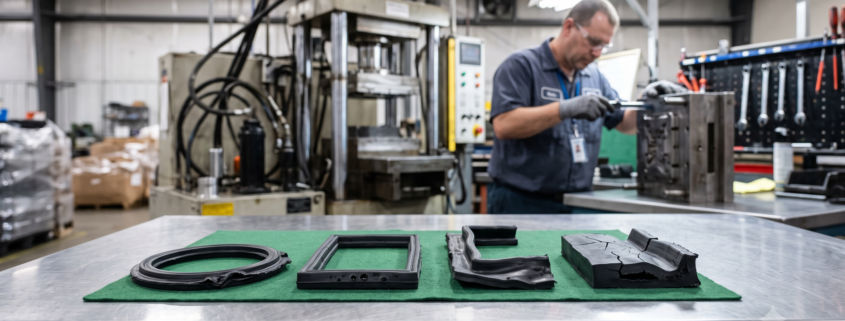
Common rubber molding defects include flashvoids, short shots, surface blemishes, and incomplete cure. Flash usually comes from weak clamp force, worn parting lines, debris, or excess pressure. Voids and short shots often trace to blocked vents, poor flow, or low shot size. Blemishes and tacky parts point to contamination, moisture, or uneven heat. Prevent them with clean molds, thin release agent, balanced fill, stable temperature, and regular maintenance. More detail follows.

Key Takeaways

  • Flash occurs when rubber escapes at parting lines; prevent it with proper clamp force, clean tooling, and correct mold alignment.
  • Void and air-trap defects result from blocked vents, trapped moisture, or uneven flow; keep vents clear and balance fill conditions.
  • Short shots happen when cavities do not fully fill; increase shot size, improve gate and runner flow, and raise fill speed if needed.
  • Surface blemishes and poor finish often result from contamination, excess release agent, or moisture; clean molds and apply release thinly.
  • Incomplete cure causes soft or brittle parts; maintain uniform mold temperature and verify cure time against the compound’s cure curve.

Common Rubber Molding Defects and Causes

Common rubber molding defects typically reflect a mismatch between tooling, process settings, and compound behavior. Flash shows as thin seams when clamping is low, pressure is high, vents are weak, or tooling is worn. Short shots appear when the cavity receives too little material, too little speed, or a gate, runner, or vent is restricted. Voids and air traps form from poor venting, high viscosity, or uneven flow. Incomplete cure leaves parts soft, tacky, or brittle when heat or time is off. Surface defects such as dullness, burn, sticking, or splay often follow contamination, excess release, moisture, or rough surfaces. Careful material selection and routine equipment maintenance help teams avoid these issues together.

Flash, Voids, and Short Shots

Flash, voids, and short shots usually point to imbalance between mold closure, venting, and flow. Flash appears when rubber escapes at parting lines, often from weak clamp force, worn edges, debris, poor mold alignment, or excess pressure. Voids show trapped gas or moisture, usually from blocked vents, high viscosity, or uneven fill. Short shots arise when the cavity never fills, often from low shot size, restricted runners, undersized gates, or an unbalanced multi-cavity setup. Routine cleaning, polishing, and repair help, as does checking venting, mold temperature, and cure cycles. Pressure profiling should be verified, and shot weight confirmed. For the team, data beats guesswork: log fill balance, temperatures, pressure, and vent status, then correct the source.

Surface Blemishes and Incomplete Curing

Surface blemishes often point to contamination, residue buildup, worn or rough mold surfaces, or mold temperatures high enough to degrade pigments, leaving dull spots, streaks, pitting, or mottling. In most cases, surface contamination can be reduced by steady cleaning, light polishing, and limiting release-agent buildup. For teams seeking consistent parts, the goal is a clean cavity and stable heat. Incomplete curing appears as soft, tacky rubber with weak elasticity when the vulcanization cycle is too short or too cool for the elastomer.

  • Verify mold temperature zones.
  • Track cure validation against cure curves.
  • Confirm uniform heating across the cavity.
  • Extend hold time in small steps.
  • If needed, stabilize temperature first.

How to Maintain Rubber Molds

Maintaining rubber molds begins with disciplined post-cycle care. After each run, crews remove residue, inspect vents, and confirm parting-line fit. Preventive inspections catch flash paths, blocked vents, and wear before defects spread. Temperature zones should be logged with thermocouples, and heating controls recalibrated often so cure remains even. Worn cavity edges may be polished or chrome-plated, while damaged seals, vents, and inserts are replaced to protect dimensions and reduce scrap. Lubrication and compatible release agents are applied sparingly and consistently, matched to compound and process heat. Inventory management keeps these parts ready. Data reviews of cavity balance, vent efficiency, and scrap rates guide preventive maintenance, helping teams hold stable cycles and stay aligned.

Why Release Agents Matter in Rubber Molding

Release agents matter because they help parts eject cleanly without sticking or tearing, provided the product matches the rubber compound and cure temperature.

  • Compatibility testing confirms the film suits the compound.
  • Application timing keeps coverage thin and even.
  • Spray, wipe, or dosing methods limit excess buildup.
  • Proper selection reduces flash, dulling, and weak edges.
  • Residue removal preserves vents and surface finish.

A compatible, thin-film release supports vulcanization and steady cure. When overused, it can leave blemishes, mottling, or poor edge integrity. In practice, the molding team benefits from routine review of release-agent performance and modest adjustments to spray frequency. That discipline lowers scrap, protects molds, and helps parts leave the tool in the same clean state every time.

Process Controls That Prevent Defects

Consistent process control is the main defense against rubber molding defects. Temperature uniformity across the cavity, held within ±5°C, supports even vulcanization and clean surfaces. Gate design, runners, and vents should match the part and be checked often; vents near 0.05–0.15 mm help air escape.

ControlPurpose
Mold temperaturePrevent incomplete cure and mottling
Clamp pressure and speedReduce flash and short shots
Compound temperatureImprove flow without early cure
Maintenance and dosingLimit contamination and sticking

Pressure sensors and cycle logs help teams keep settings steady. Preheated feed material should reach the target viscosity in the data sheet. Routine cleaning and measured release-agent dosing preserve vent function and surface quality. These controls help the shop stay consistent together.

Fast Rubber Molding Troubleshooting

When defects appear, fast troubleshooting starts with the same controls that keep molding stable. Rapid troubleshooting begins with defect diagnostics on mold cycling, charge, and cure. A steady team checks the basics, then narrows the fault.

  • Verify mold temperature uniformity; ±5 °C gaps, low heat, or excess heat point to short shots, cold flow, foaming, or early cure.
  • Confirm shot size and injection speed each cycle; low charge or slow fill invites voids, while speed can raise flash and jetting.
  • Clean vents and parting lines; trapped air and poor alignment cause voids and flash.
  • Audit cure time against T90, then adjust hold time when tack or brittleness appears.
  • Use pressure troubleshooting and release-agent logs to separate sticking, cold flow, and surface blemishes.

Frequently Asked Questions

Which Common Injection Molding Defects Have You Faced Before How You Fix Them?

Air entrapment and flash formation were noted most often. He would clear vents, balance fill, raise clamp force, and reduce pressure. She would also check temperatures and viscosity, seeking steady parts and shared confidence in the process.

Conclusion

In rubber molding, defects usually trace back to mold condition, process instability, or poor material handling. Flashvoids, short shots, blemishes, and incomplete curing can often be reduced through routine mold maintenance, proper use of release agents, and tighter control of temperature, pressure, and cure time. Quick troubleshooting helps isolate the source before waste grows. Consistent inspection and disciplined process control remain the most effective safeguards against repeat defects and costly rework. As a trusted rubber supplier and manufacturer in the Philippines, RK Rubber Enterprise Co. continues to apply these principles in delivering cost-efficient, high-quality rubber products, while also providing expert support and installation services to help clients achieve reliable results.